Baldwin Park Wood Flooring has handled wood-flooring in Commerce for homeowners and landlords across more than 20 years, and most of that work begins with a floor someone else put down long ago. We repair, sand, refinish and replace hardwood, engineered plank and the subfloors under them, and we price each job on what we actually find rather than on a guess made at the front door.
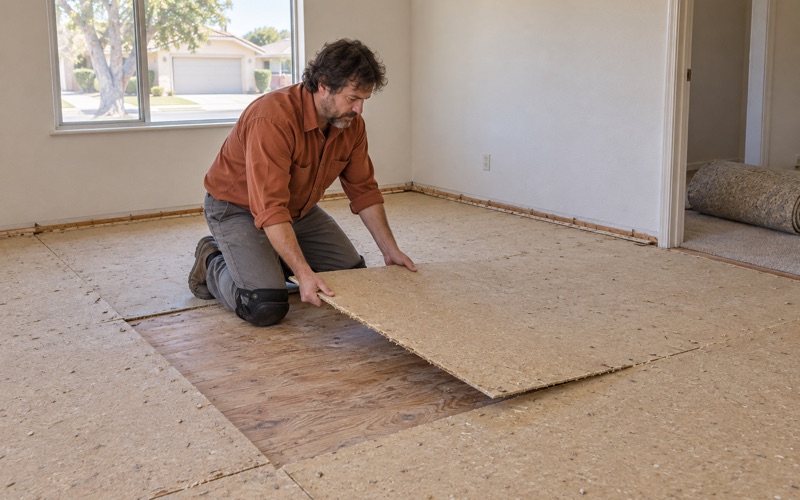
Before a number goes on paper, we fold back one corner of the carpet and look. Oak strip, plywood and particle board each call for a different plan. The tack strip holes, staple rows and pad stains left behind are part of our scope, not something to hide under an area rug once the new floor is in.
We also confirm the build year, measure the wear layer on engineered boards and choose finishes that are legal to apply locally. Landlords get move-out photos and a written scope, and large households get a room-by-room schedule showing when furniture and people can return. The sections below explain how that plays out in the houses this city actually has.
A Housing Stock That Stopped Growing in 2009
No New Houses Since 2009
The American Community Survey 2024 five-year estimate counts no housing units in Commerce built in 2010 or later, and only 121 built between 2000 and 2009. For a flooring customer that is a practical fact, not trivia. A builder-original floor from recent construction is essentially absent here, so the plank in a living room was almost certainly laid over something older.
That changes how we read a room. A luxury vinyl plank or engineered floor in a Commerce house is usually a replacement, and the real question is what it replaced. It may sit over earlier wood, over black mastic from old 9x9 floor tile, or over a patched plywood subfloor, and each of those decides whether the next floor goes down cleanly.
The 1940s Were the Busiest Decade
The peak building decade in Commerce was 1940 to 1949, with 887 units, or 26.2 percent of the housing stock. The 1950s followed almost level at 877 units, 25.9 percent. Together those two decades account for 52.2 percent of the city’s 3,381 housing units, while only 5.0 percent were built before 1940.
A floor in a house that age has usually been through several owners and several fixes. We expect layered histories: carpet over wood, laminate over carpet adhesive, tile over linoleum adhesive, and board replacements that do not match the species or width around them. We never assume which layer sits at the bottom until a corner has been opened and checked.
Reading an Old Floor Before Quoting It
Decades of use show up as squeaks, nail pops, hollow spots and the occasional soft spot near a bathroom or back door. We walk the whole floor, take moisture meter readings wherever staining suggests a past leak, and note any cupping or crowning that points to an active water source rather than simple age.
Small holes and powdery piles get a closer look too. Drywood termite pellets, powderpost beetle frass and old nail holes can look alike at a glance, and the difference matters. We identify which one we are looking at before replacing a single board, so a repair does not go down over activity that belongs to a pest inspector first.
Looking for wood-flooring closer to La Cañada Flintridge? See La Cañada Flintridge Wood-Flooring.
Restore the Original or Lay New Over It
When the Existing Wood Is Worth Saving
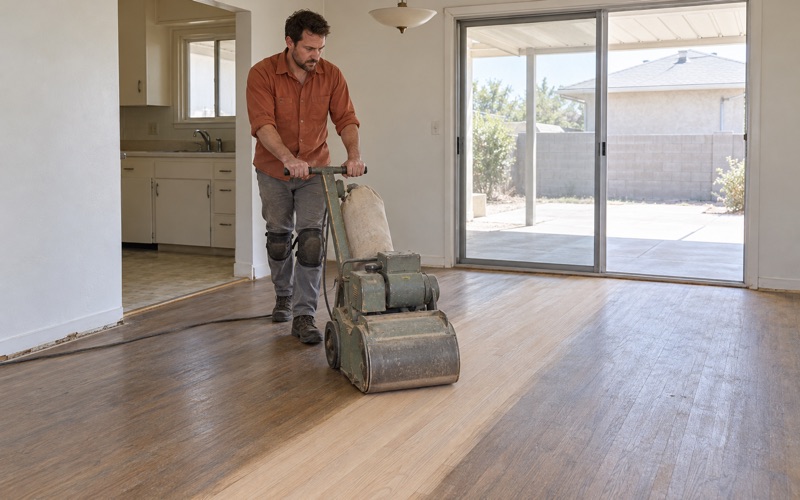
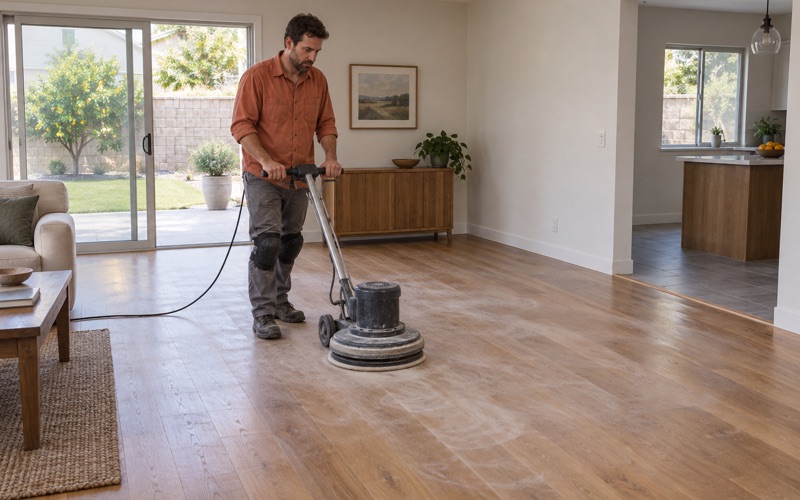
If carpet or a floating floor is covering solid wood, restoring it is often the better value. Sanding with a drum sander and edger, working through an abrasive grit sequence, then sealing and finishing brings back boards that still have thickness left. Before starting, we check for sand-through risk from earlier refinishing, gray boards from old water and pet urine stains that sanding alone will not lift.
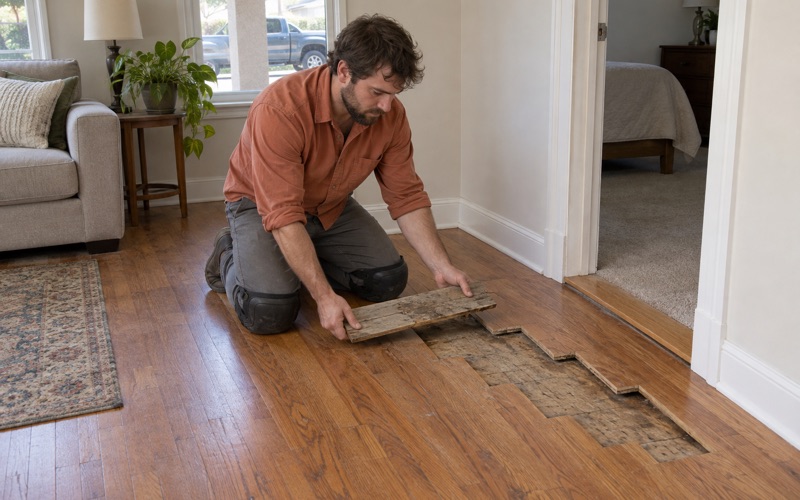
Where a few boards are beyond saving, we use a weave-in repair so the new pieces run with the old ones instead of forming a visible patch. Tack strip holes along the walls and staple rows from the carpet pad are filled or replaced during the same visit, so the restored floor does not carry a ring of damage around each room.
When an Engineered Floor Limits the Options
An engineered hardwood floor put in during a later remodel is a different case. We measure the wear layer thickness before promising a full sand, because a thin veneer can take a screen and recoat but will not survive a sanding. Veneer delamination, finish peeling and sun fading on prefinished boards are the signs we look for before recommending either path.
Laminate flooring and luxury vinyl plank cannot be sanded at all. When those are worn through, the choice is replacement, and we say so plainly rather than selling a coating that will not hold. Pulling them up often reveals what the earlier installer left underneath, which is where the real planning for the new floor starts.
Laying New Flooring Over an Older Substrate
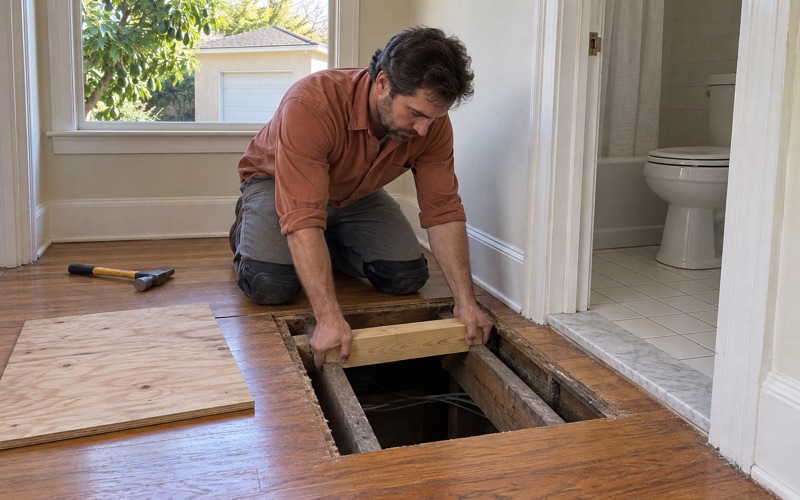
When a new floor is the right call, the substrate gets prepared before any boards arrive. A plywood subfloor with particleboard edge swell, a board subfloor with loose planks, or residue left by carpet adhesive each needs its own fix. Where old 9x9 floor tile or its black mastic is involved, we stop and recommend an asbestos survey, as SCAQMD Rule 1403 contemplates, before anything is disturbed.
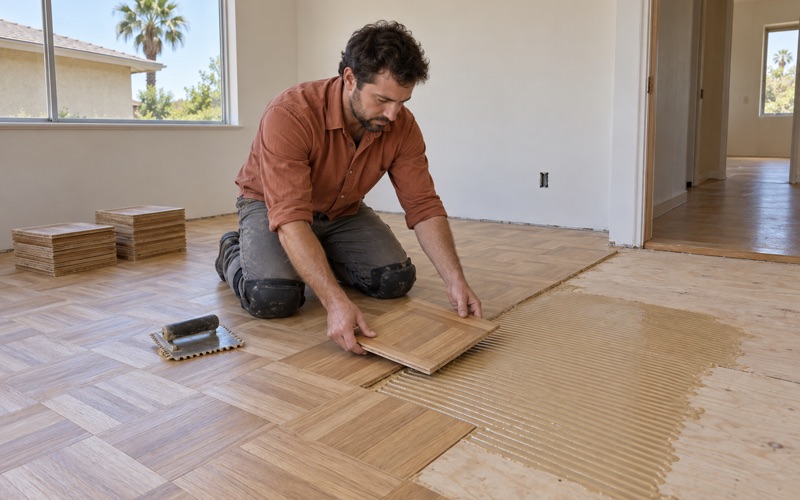
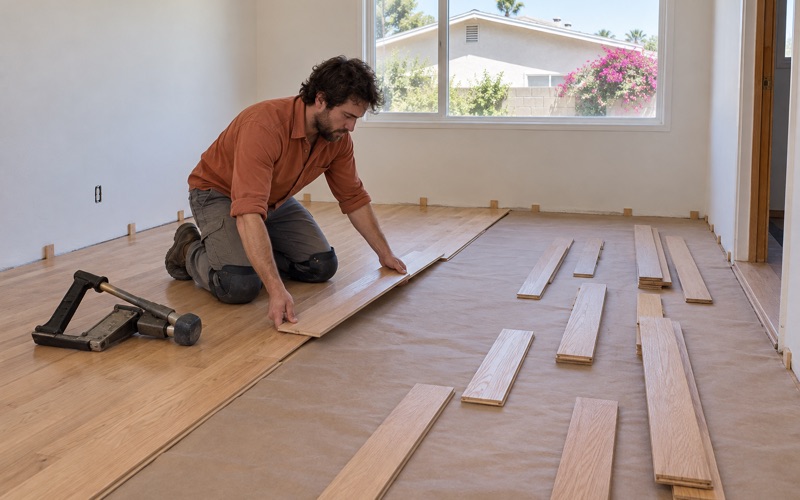
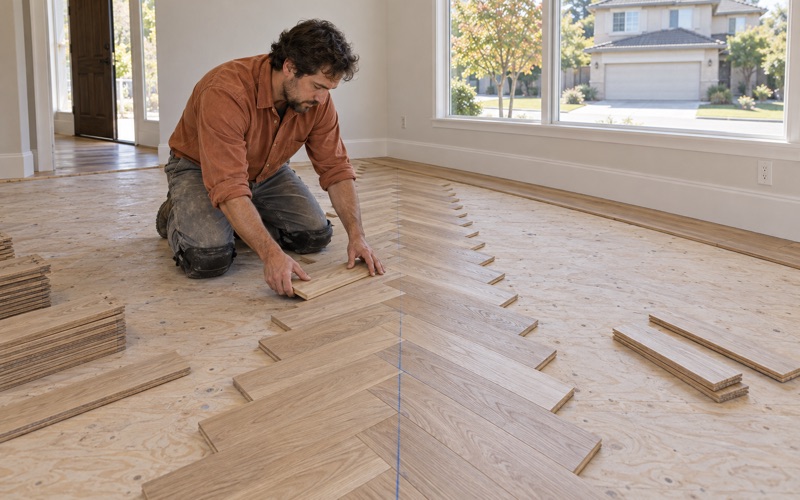
New solid hardwood is acclimated in the house, installed with the right flooring cleat or staple and nailing schedule, and given a proper expansion gap at the walls. Engineered plank can be nailed, glued or floated depending on the subfloor. Transitions into older rooms get reducers, T-molding, quarter round or shoe molding cut to fit floors that have settled over the years.
Rented Houses in Bandini, Rosewood and Laguna
Detached Rentals in a Small Residential Enclave
The homes in Commerce sit in residential communities such as Bandini, Rosewood and Laguna, and detached houses in the city are not only owner homes. The ACS estimate counts 572 renter households living in detached houses, 38.4 percent of the city’s renters. For us that makes single-family rentals between tenants a routine part of the flooring work in this city.
A detached rental takes its own kind of wear. Grit from a yard reaches the floor, a pet may have lived there, and furniture gets rearranged with every new tenant. Those habits show up as scratched finish near entries, stains and dented boards, and we quote them as specific repairs rather than defaulting to a blanket replacement of the whole house.
Turnover Floors and Deposit Records
Between tenants, we photograph the floor at move-out and write a scope a landlord can file alongside the deposit paperwork. That record helps separate normal wear and tear from damage when the owner prepares the security deposit itemized statement under California Civil Code 1950.5. We describe the condition of the floor, and the landlord makes the deposit decision.
Turnover schedules are tight, so we plan the fastest sound option. A screen and recoat can refresh a finish in a short window, while a full sand needs cure time before furniture returns. We tell the owner which one applies before the house is listed, so the vacancy is not stretched by a floor that was misjudged at the start.
Stairs and Full Households
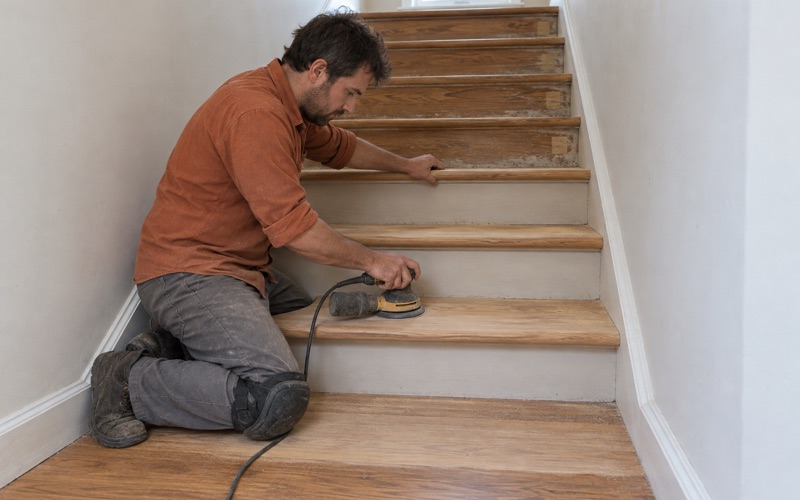
Stairs are priced by the tread, riser and stair nosing rather than folded into a square-foot rate. Worn treads can be sanded if enough wood remains, or covered with a retrofit tread when it does not, and the quote lists each piece so an owner can compare those options line by line before choosing.
For large and multigenerational households, where moving everyone out is not realistic, we write a room-by-room schedule. It shows which rooms close on which days, when rugs and furniture can come back, and when people can walk on a fresh coat. Working in phases keeps the house livable while the floors are being finished.
Coating, Lead and Permit Rules for Older Homes
Lead-Safe Planning in Pre-1978 Houses
With 72.9 percent of the housing units in Commerce built before 1980, painted baseboards, trim and old finish layers from before 1978 are a routine part of the work here. We check the build year before any sanding is scheduled, because pre-1978 housing falls under the EPA Renovation, Repair and Painting Rule when painted surfaces are disturbed.
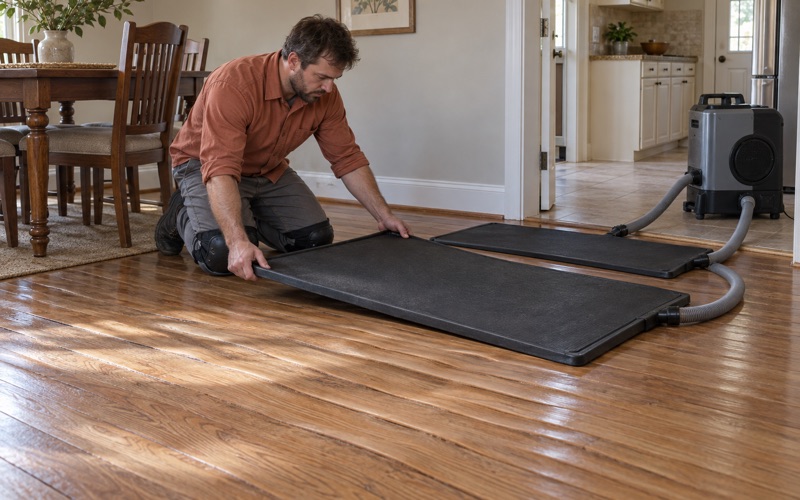
That check changes the plan, not just the paperwork. Containment, dust control and cleanup are set up before the drum sander runs, and dustless sanding equipment keeps fine dust down. Shoe molding and quarter round attached to older painted trim are handled with the same care, since prying them loose can disturb paint as well.
Finishes That Meet South Coast Air Rules
Commerce is in the South Coast Air Quality Management District, where the wood coatings VOC limit under Rule 1113 is 275 grams per liter. We choose waterborne polyurethane, oil-modified polyurethane, hardwax oil and sanding sealer from products that are legal to apply here, then match stain and sheen level to the room.
Finish problems on older floors often trace back to what was used before. White haze, a cloudy finish, a sticky finish or an orange cast usually means an incompatible coat or one that never fully cured. We identify the existing coating before recoating anything, since new product laid over a failed layer tends to peel within months.
Building and Safety Review for Structural Repairs
Refinishing is one thing, and a rotted subfloor, a sagging floor or a damaged floor joist is another. The City of Commerce runs its own Building and Safety Division, which handles plan check, inspections and building permits. We never treat structural subfloor or joist work as permit-free, and we confirm requirements with that division before we sister a joist or replace framing.
The division has stated that plans submitted from January 1, 2026 are checked against the 2025 California Building, Residential and related codes. When a water or smoke loss is behind the repair, we also document the damage with photos and moisture readings an adjuster can use, so the structural fix and the insurance claim move forward on the same record.
- 20+ Years in Wood Floors
- Free Written Estimates
- Rental and Claim Documentation