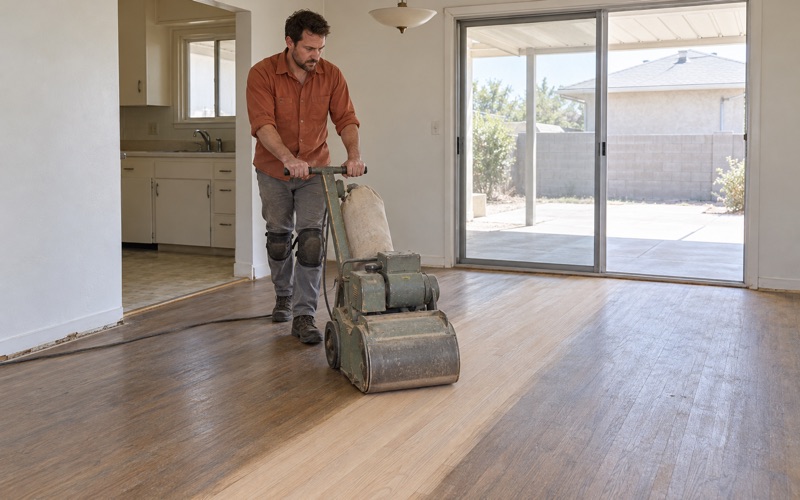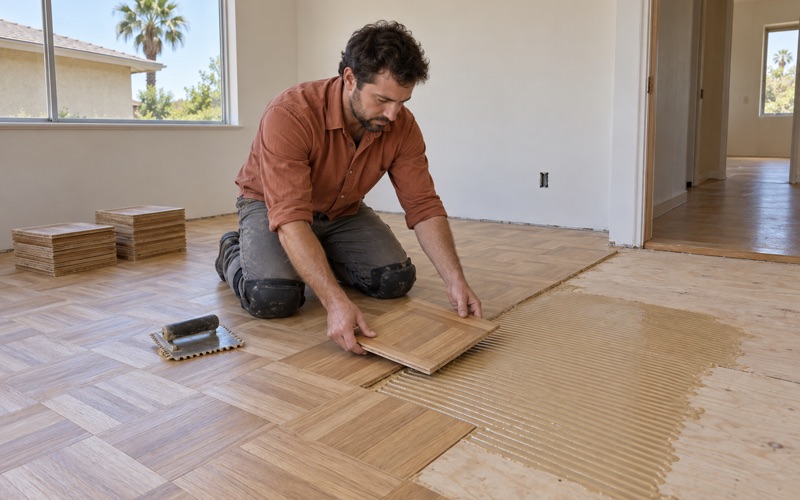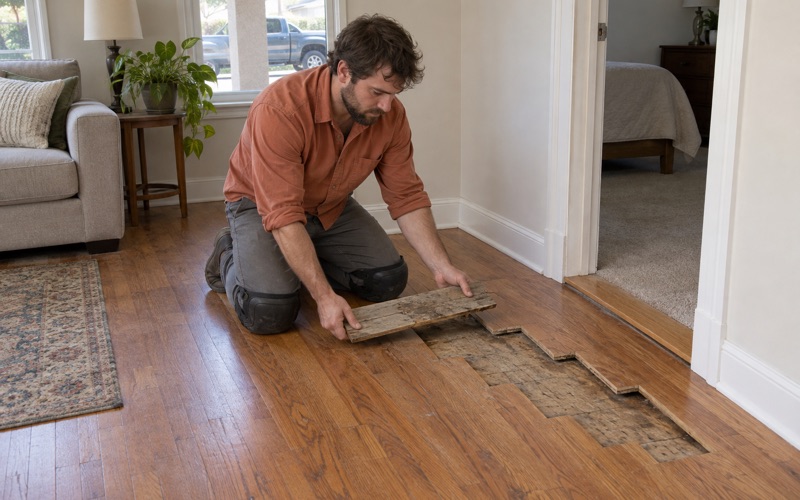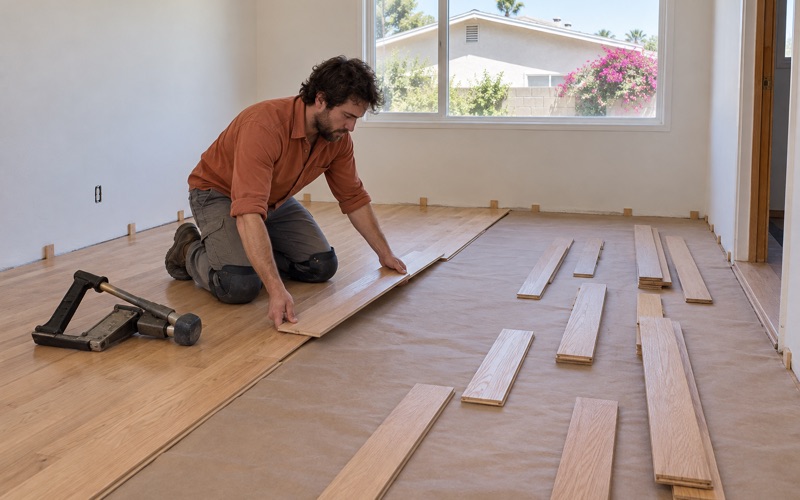
Baldwin Park Wood Flooring handles wood-flooring in El Segundo with more than 20 years of sanding, installing and repairing hardwood behind us. We refinish tired oak strip flooring, install solid and engineered hardwood, replace damaged boards with weave-in repairs and rebuild worn stairs. Every quote we write starts with what is actually under your feet, not with a guess about what is probably there.
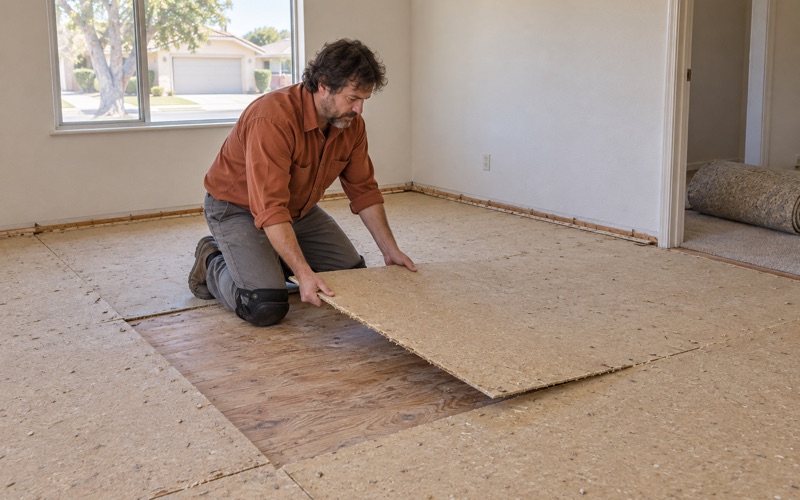
That means lifting a corner of carpet before we price anything, so the estimate names the oak, plywood or particle board we found. When carpet comes out for good, the tack strip holes, staple rows and pad stains get repaired as part of the same job instead of hiding under a rug. On engineered floors we measure the wear layer first, because a thin veneer can take a screen and recoat but not a full sanding.
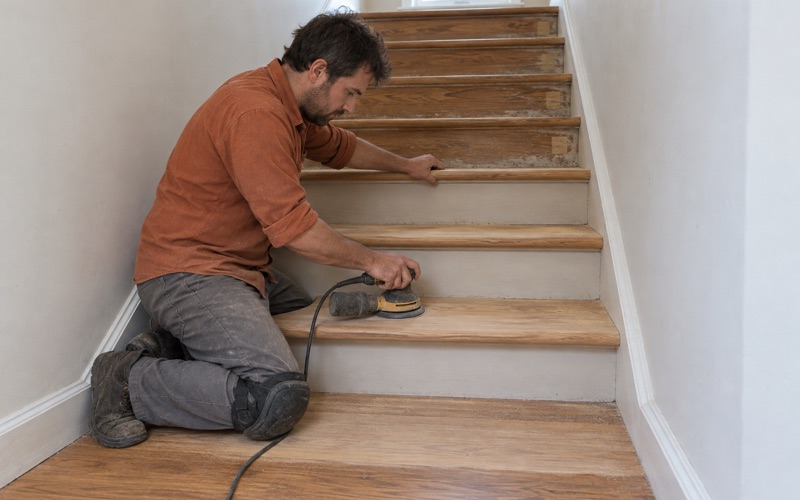
For landlords turning a unit between tenants, we write the scope against the move-out photos so it can sit with the deposit records. Stairs are priced by the tread, riser and nosing rather than buried in a square-foot number. Below, we walk through the local conditions that change how floor work goes here, from airport noise treatments to older apartment buildings and coastal rules.
What the LAX Sound Program Treats, and What It Leaves to the Floor
Windows, doors and ventilation
The LAX Residential Sound Insulation Program, run by Los Angeles World Airports with the FAA, serves previously untreated units in the City of El Segundo. According to the program, it may retrofit exterior doors and windows, install a ventilation system and add other miscellaneous treatments, with a goal of improving interior noise levels by at least five decibels. Homes in the higher-noise contours are treated first.
The effort here is older than the current program. The City of El Segundo established its own Residential Sound Insulation Program in 1993, and in its early years typical improvements included acoustically rated replacement windows and exterior doors, added attic insulation, fireplace glass doors and ventilation systems. Those details describe the program as it stood then; current eligibility is set by the airport program today.
Floors are not on the list
Floors are not named among the treatments the program describes. Aircraft noise reaches a room through the building envelope: glass, door gaps, attic space and vents. The noise a downstairs neighbor hears is a different problem, made by footsteps, dropped objects and chair legs, and it travels through the floor assembly itself. The program does not pay for or approve flooring, and we do not work under it.
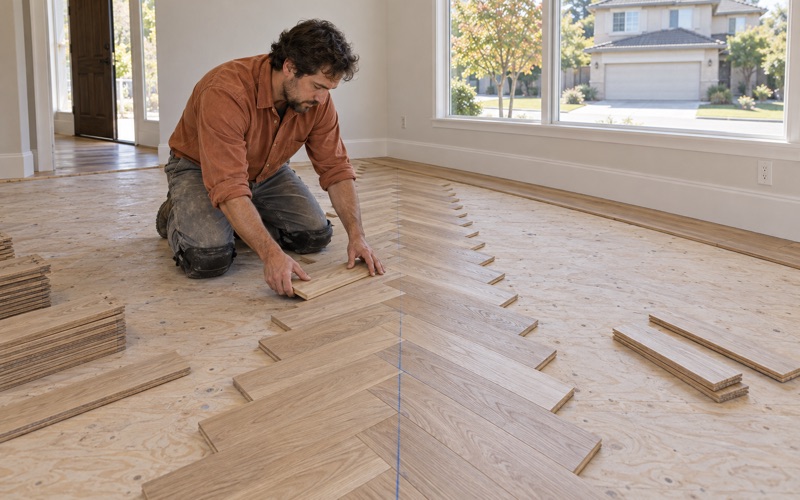
So when a treated home or apartment gets new flooring, the choice of floor and what goes beneath it belongs to the owner, not the program. We talk through how solid hardwood, a floating engineered floor and a glue-down installation each behave underfoot, and we ask whether a building’s own rules say anything about what goes over the subfloor before we order a single carton of material.
Quieter rooms make floor sounds easier to notice
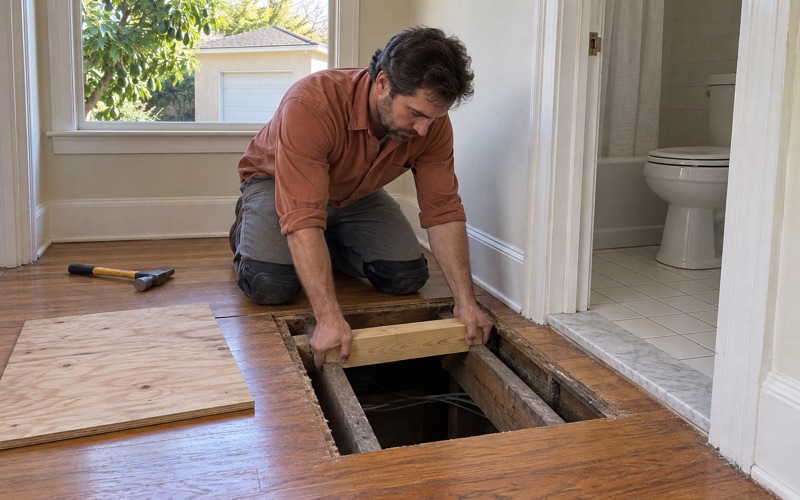
When outside noise is reduced, sounds inside a home can stand out more. Squeaks, nail pops and hollow spots that went unnoticed for years can become the loudest thing in a bedroom. We track those down before refinishing, refastening loose boards where we can reach the floor joist or subfloor, so a fresh finish is not laid over a floor that still talks every time someone crosses it.
Looking for wood-flooring closer to Hermosa Beach? See Wood-Flooring Services in Hermosa Beach.
Floors in Mid-Century Small Apartment Buildings
A renter-majority housing stock
El Segundo is more of a renter city than many visitors expect. American Community Survey 2024 five-year estimates show 57.5 percent of occupied units are renter-occupied. Buildings of five to nine units hold 1,704 housing units, 21.6 percent of the city’s stock, and those buildings are home to 1,438 renter households, about a third of all renters in the city.
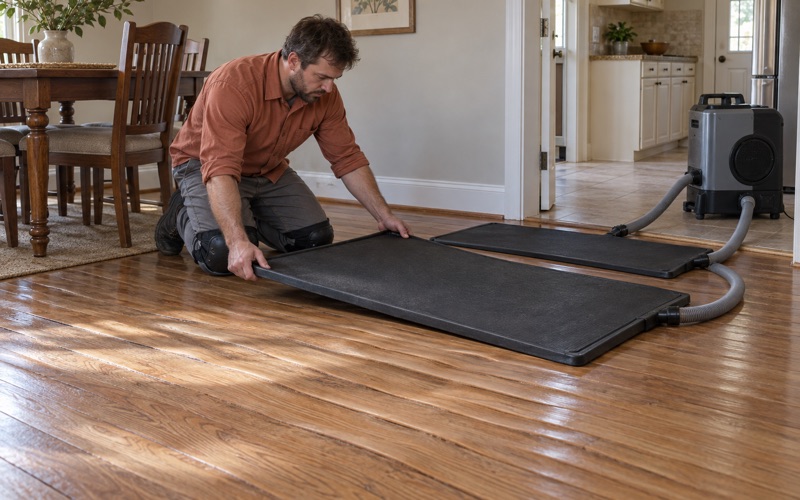
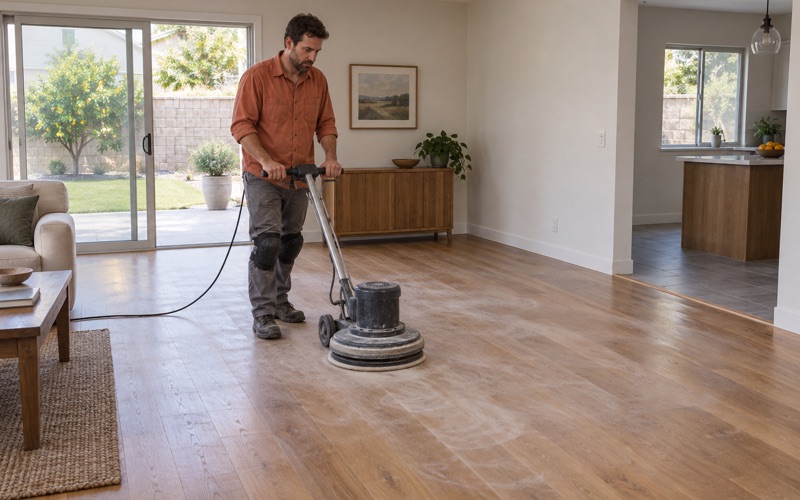
That shapes how we plan the work. In a small building the unit below is close, the stairwell is shared, and the tenant next door may be home during the day. We schedule sanding around those conditions with dustless sanding equipment connected to vacuum extraction, a written plan for each room, and a clear note of when the floor can take foot traffic and furniture again.
Floor noise is left to the floor and the building’s rules
Because the sound program works on a building’s exterior, noise between stacked units depends on the floor assembly and whatever the owner or association requires. Some buildings set rules about hard flooring replacing carpet, or call for an underlayment beneath it. We ask for those rules before quoting, and we do not promise a measured sound result, since no single rating settles that question for every building.
Where carpet is coming up in an upstairs unit, we look at the subfloor first. Particle board with swollen edges, black mastic left from old 9x9 floor tile, or loose parquet each change what can go on top, and old tile and mastic call for an asbestos survey under SCAQMD Rule 1403 before removal. A floating floor, a glue-down engineered floor and a nail-down solid floor each ask something different of that surface.
Turning a unit between tenants
For owners of these buildings, the floor between tenants is usually a screen and recoat or a full refinish, and the difference matters for the deposit conversation. We compare the floor with the move-out photos, separate pet urine stains and deep gouges from normal wear and tear, and hand over a written scope that can sit beside the itemized statement California Civil Code 1950.5 calls for.
We also look closely at small holes before replacing any boards. Tiny piles of pellets can point to drywood termites, powdery frass can mean powderpost beetles, and a neat row of holes is often just where carpet staples once sat. Knowing which one it is decides whether the owner needs a Wood Destroying Pests and Organisms Inspection Report before a board replacement goes in.
Houses in a Refinery Town
Built around the refinery and the airport
El Segundo takes its name from Standard Oil’s second West Coast refinery, built after an 840-acre purchase in 1911, and the city incorporated on January 18, 1917. Roughly three quarters of its land is dedicated to industrial and commercial uses, the Chevron refinery covers more than a quarter of the city, and LAX forms its northern boundary. The houses sit mostly in the western residential area.
Much of that housing came in the decades after the refinery arrived. American Community Survey counts show 54.1 percent of the city’s housing units were built between 1940 and 1969, with the 1960s the single busiest decade. Houses from that era were commonly finished with oak strip flooring, and in many rooms that floor can still be found under carpet, sheet vinyl or laminate added later.
Checking the build year before sanding
A home built before 1978 can carry lead in old paint on baseboards and trim, and sometimes in earlier finish layers. With 73.4 percent of the city’s units built before 1980, we check the build year before any sanding date goes on the calendar. When a job falls under the EPA Renovation, Repair and Painting Rule, we plan containment and cleanup to match rather than discovering it halfway through the first pass.
Refinishing oak that has been sanded before
Oak that has been down for sixty or seventy years has often been refinished at least once. We check board thickness at a floor vent or threshold, look for exposed nail heads and tongue edges that signal thin wood, and choose an abrasive grit sequence that removes the old finish without taking more wood than needed. Chatter marks, edger marks and sand-through from earlier jobs are repaired or blended.
Finish choice matters just as much. Every coating we apply is legal in the South Coast Air Quality Management District, where the wood coatings VOC limit under Rule 1113 is 275 grams per liter. Within that limit, we compare waterborne polyurethane, oil-modified polyurethane and hardwax oil on how each one wears, how it colors red or white oak, and how long a room stays off limits while it cures.
Coastal Permits and Interior Floor Work
The city’s certified coastal program
The California Coastal Commission lists El Segundo’s Local Coastal Program as effectively certified in 1982, with no uncertified areas shown for the city. That means the City of El Segundo issues coastal development permits within its own coastal zone. The separate Airport and El Segundo Dunes segment in the same Commission chart belongs to the City of Los Angeles, not to El Segundo.
State law draws some lines here. Public Resources Code Section 30610 does not require a coastal development permit for improvements to existing single-family residences, or for repair and maintenance that does not enlarge a structure, subject to classes the Commission sets by regulation. Those regulations name settings, such as a beach or land within 50 feet of a coastal bluff edge, where improvements can still need review.
What we check instead of assuming
Whether interior floor work on a particular property falls into any of those classes is not something we settle from a general rule. If your home is in the coastal zone, or its original permit said future improvements would need review, we ask you to confirm with the city before we schedule. We will not guess at a coastal answer for floors in either direction.
The same caution applies to building permits. Refinishing and replacing boards is one thing; repairing a rotted subfloor, a sagging floor or a damaged floor joist is structural work. Before opening a floor like that, we check with the City of El Segundo Community Development Department’s Building and Safety Division, which handles plan review, permit issuance and inspection.
Water, smoke and the written schedule
Once those questions are answered, everything goes in writing: the room order, the drying and cure times, and the day furniture, rugs and people can come back. For a water or smoke loss, we add moisture meter readings and dated photos an adjuster can use, so the floor side of the claim is documented from our very first visit rather than reconstructed later.
- 20+ Years in Wood Floors
- Free Written Estimates
- Rental and Claim Documentation