
Baldwin Park Wood Flooring has repaired hardwood floors for more than 20 years, replacing damaged boards, quieting squeaks and correcting the moisture and pest problems behind them in Baldwin Park, CA. We also serve surrounding cities including West Puente Valley, Vincent, South Monrovia Island, Mayflower Village and North El Monte.
A good repair is invisible. That means matching the species, board width and cut, weaving new boards into the existing rows rather than patching a square, and blending the finish so the fix does not stand out every time light crosses the room. It also means fixing whatever damaged the boards in the first place.
Most repair visits start with a moisture meter, a close look at any holes or stains, and a check underneath the floor where there is access. The estimate then tells you what is wrong, what we will replace and whether the room needs refinishing to finish the job properly.
Board Replacement and Weave-In Repairs
Matching Species, Width and Grade
Older houses in Baldwin Park commonly have red oak or white oak strip flooring, while newer floors range from wide plank to engineered products. Before replacing anything, we identify the species, measure board width and thickness, and note whether the boards are plainsawn or quartersawn. Getting those right is what makes a repair disappear.
When the exact board is no longer made, we look for salvaged material, sometimes taken from inside a closet, and replace the closet area with close-matching new wood where it will never be noticed.
Weaving New Boards Into the Floor
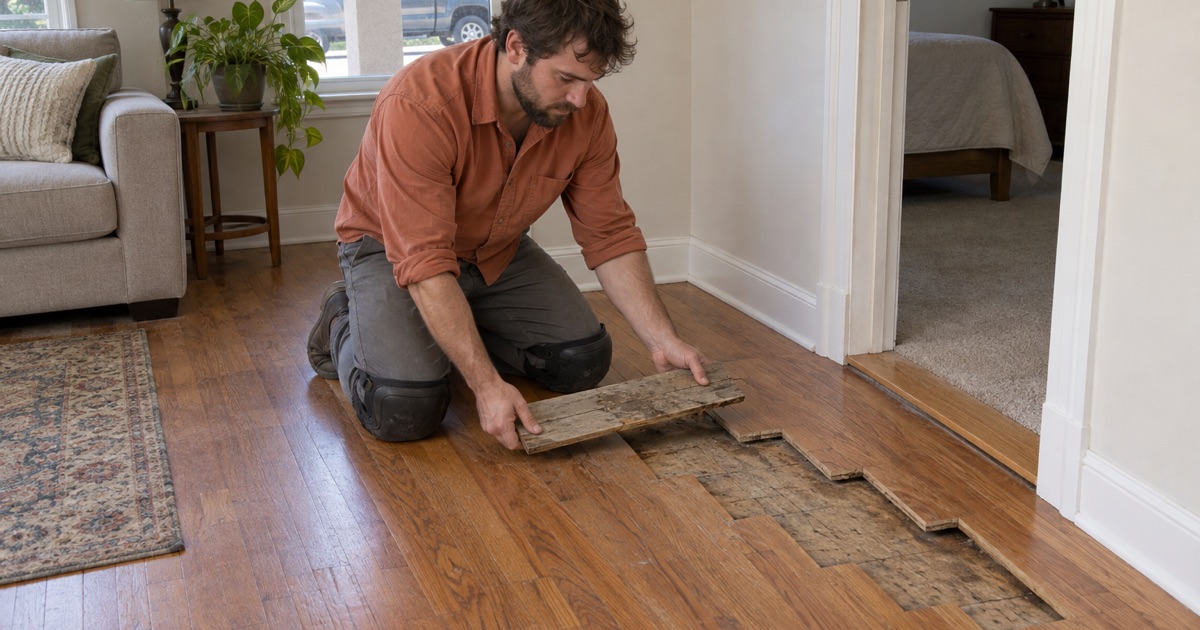
A square patch cut around a stain leaves straight seams that show forever. We remove damaged boards at staggered lengths and weave replacements into the existing rows, so the joints fall in the same random pattern as the rest of the floor. Tongues on the last board are trimmed so it can drop in and be fastened securely. This takes longer than cutting a rectangle, but it is the difference between a repair you can point to and one that looks like it was always there.
Blending the Finish After a Repair
New boards start out raw, and an old floor has years of finish color and wear. On a small repair in a low-traffic spot, we can sometimes stain and coat just the new wood. More often, the room or section between natural breaks, such as doorways or thresholds, gets a sand and refinish so the color and sheen match across the whole surface.
Repairing Common Hardwood Floor Damage
Pet Urine and Black Water Stains
Urine and standing water react with oak tannins and turn boards gray, then black. A light surface stain may sand out, but deep black staining usually runs too far into the wood. We mark every affected board, replace those that will not come clean and then refinish the area so no dark shadows remain.
Odor matters too. If urine has soaked into the subfloor below, that section is treated or replaced before new boards go down, or the smell returns.
Drywood Termite and Powderpost Beetle Damage
Kick-out holes with small piles of termite pellets point to drywood termites. Fine, powdery frass suggests powderpost beetles. We identify the evidence and recommend a licensed pest inspection when it looks active, since some owners need a Wood Destroying Pests and Organisms Inspection Report for a sale or refinance anyway.
Board replacement is scheduled after treatment, whether that is tent fumigation or a localized method. Replacing boards first only gives the insects new wood to work through.
Deep Scratches, Gouges and Dents
Furniture drags, dropped tools and pet claws cause most surface damage. Scratches that stay in the finish can usually be handled with a screen and recoat. Gouges that go deep into the wood may be filled on darker floors, but on light or natural finishes we usually replace the board so the repair does not read as a patch.
Sun Fading and Discolored Sections
Floors near large windows or sliding doors fade or darken unevenly, and a rug removed after years leaves a clear outline. Sanding removes the discolored surface layer, and a refinish evens the tone. We also discuss finish and window-covering options so the new color lasts longer.
Some discoloration is not fading at all. Paint overspray from a past remodel, a dark ring under a potted plant, or an old rug pad that reacted with the finish can each look similar at first glance. We test the spot before choosing between cleaning, sanding and board replacement.
Squeaks, Gaps and Movement
Squeaks and Nail Pops
A squeak means something is moving: a board against its neighbor, a loose cleat or a subfloor panel shifting on a floor joist. Nail pops happen when fasteners back out and lift the surface. On a raised foundation, we can often tighten the subfloor to the joists from the crawl space with screws or shims. Where there is no access, we use concealed trim-head screws from above.
We also check the original nailing schedule. A floor fastened too far apart, or with the wrong flooring staple crown width, can squeak across whole rooms, and fixing that means adding fasteners systematically rather than chasing one noise.
Seasonal Gapping and Wide Gaps
Wood shrinks in dry months and swells in humid ones, so fine gaps that come and go with the seasons are normal. Gaps that stay wide year-round, or cluster in one area, often trace back to water damage, poor acclimation or a floor installed while too wet. We measure moisture before deciding on a repair.
Permanent gaps can be filled with wood slivers glued to one board edge, which moves with the floor better than putty. Severe gapping across the room sometimes calls for pulling and relaying boards.
Hollow Spots Under Glue-Down Floors
Glue-down engineered floors and parquet sometimes develop hollow spots where the adhesive did not bond or has let go. Small areas can be injected with adhesive through tiny holes that are then filled. Larger failures mean lifting planks, cleaning the substrate and resetting them properly.
When Moisture Is the Real Problem
Cupping, Crowning and Buckling Floors
Cupping means the boards are wetter underneath than on top, often from a leak, a damp crawl space or a slab moisture issue. Crowning often shows up when a cupped floor was sanded flat before it dried. Buckling, where boards lift off the subfloor, is the most serious sign of water damage.
We find and stop the moisture source, monitor readings until the wood returns to normal levels, then decide whether the floor can be flattened by sanding or needs board replacement. Sanding too early simply creates the next problem.
When the Subfloor Needs Repair Too
A soft spot, a sagging area or boards that keep failing in the same place often point to a rotted subfloor or a damaged floor joist. In those cases, we open the floor, repair the subfloor or sister the joist, and then relay the hardwood so the repair lasts.
We save and number the boards we lift wherever they come up intact, so the same wood goes back in the same place. That keeps the grain and color continuous and cuts down on how much new material has to be blended in afterward.
Repair, Refinish or Replace
If damage is limited to a few areas and the rest of the floor is sound, repair and refinishing is almost always the better value. When damage covers most of a room, an engineered floor has no wear layer left or moisture has ruined the subfloor, replacement makes more sense. We lay out both options with costs so the choice is yours.
- 20+ Years in Wood Floors
- Free Written Estimates
- Rental and Claim Documentation