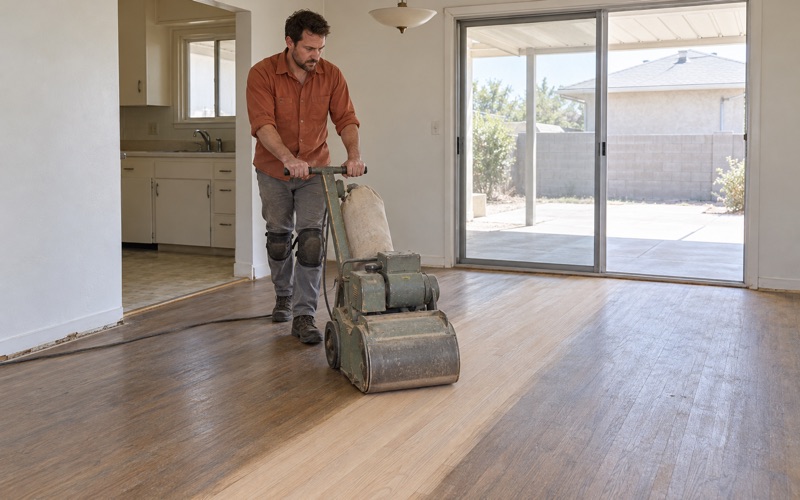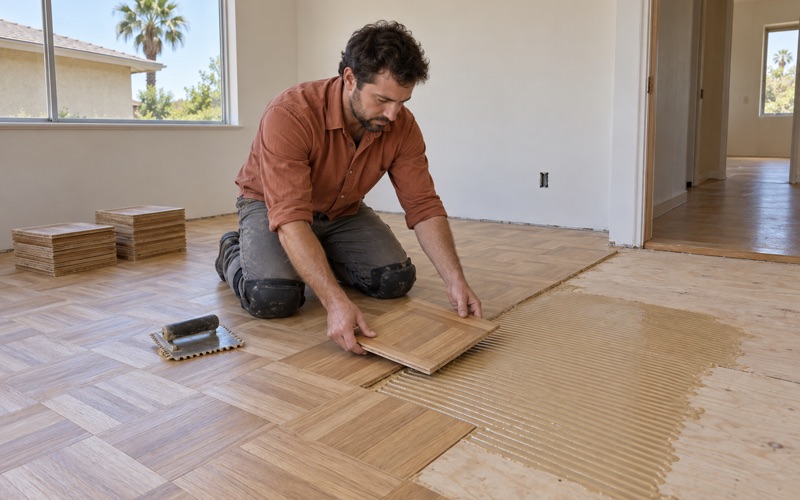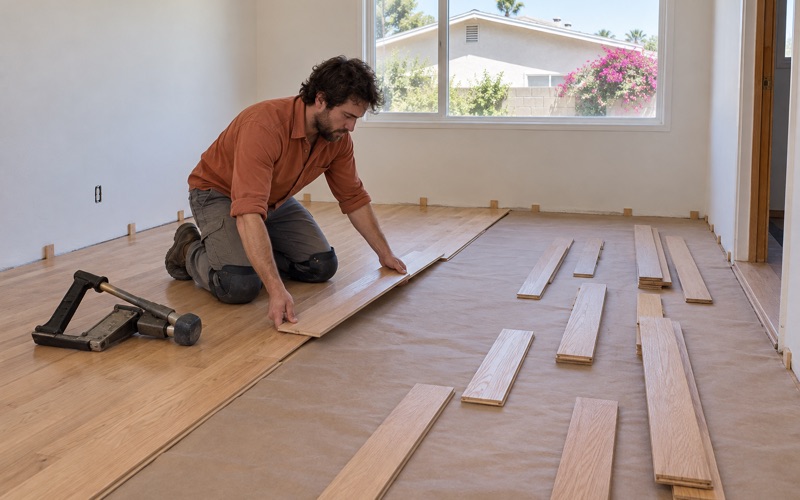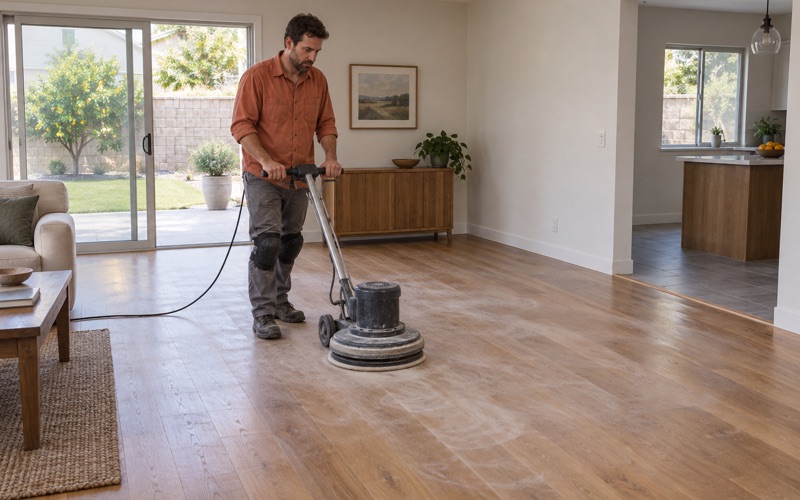
Baldwin Park Wood Flooring brings more than 20 years of wood-flooring in Hawaiian Gardens and the surrounding county to installs, sanding, refinishing and board repair. We work in whatever kind of home the floor happens to be in, and we write the scope for that building rather than for a generic house with a generic subfloor.
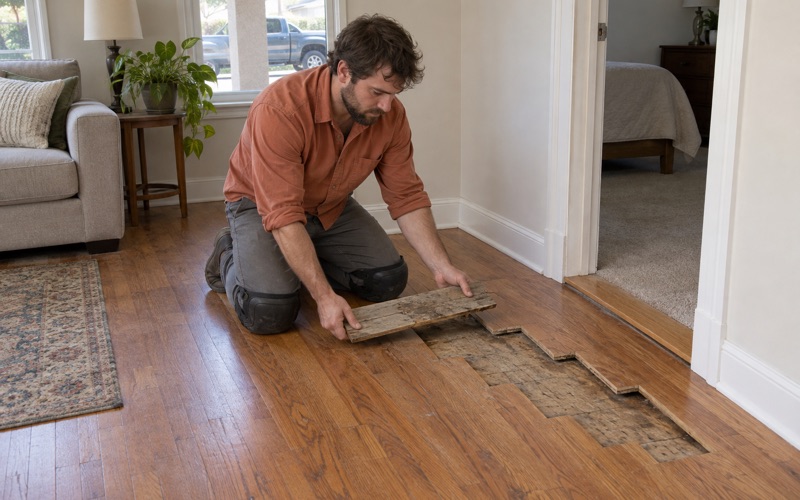
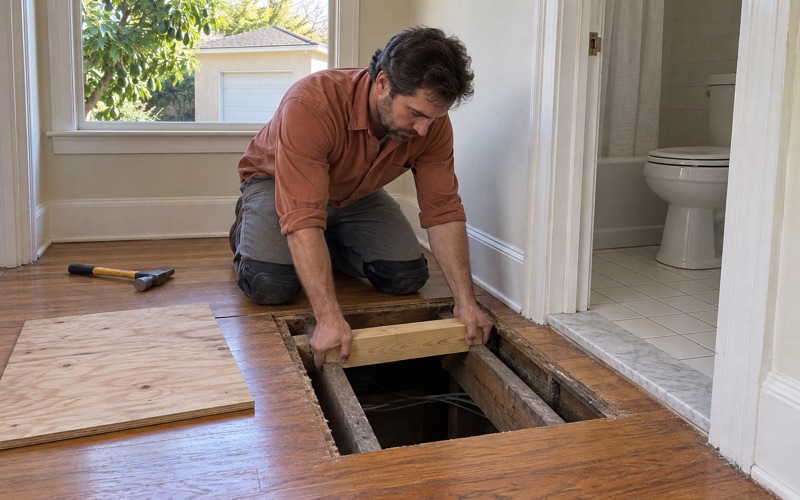
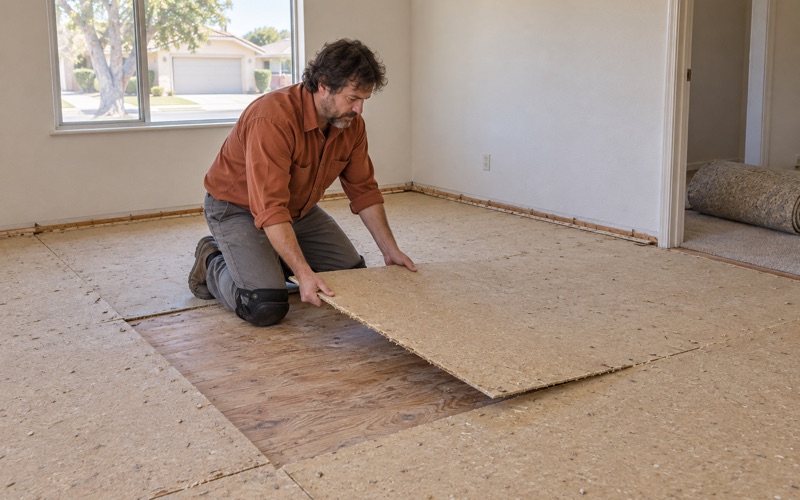
Before a number goes on paper, we pull the carpet back in one corner. What sits under it might be red oak strip flooring, a plywood subfloor or particle board, and each one leads to a different job. An estimate written after that look holds up better than one guessed from the doorway, and it saves a second visit once the old carpet comes out.
The small details get handled inside the job instead of being covered over. Tack strip holes, rows of carpet staples and old pad stains are repaired as part of a carpet-to-wood conversion. On engineered hardwood we measure the wear layer before promising a full sand, because a thin veneer can take a screen and recoat but not a trip under the drum sander.
Every Kind of Home in Under a Square Mile
Fewer than half are detached houses
Hawaiian Gardens covers 0.945 square miles of land, and its housing does not look like a typical suburb. According to the Census Bureau’s 2024 five-year American Community Survey, only 44.8 percent of the city’s housing units are one-unit detached houses. The rest are attached homes, duplexes, small plexes, larger buildings and mobile homes, all packed into a city incorporated on April 9, 1964.
That mix shapes how we plan a visit. A floor call here could come from a detached house, a unit that shares a wall, the upstairs half of a duplex or an owner’s manufactured home. We ask which one before we arrive, so the right tools, transition pieces and protection materials come along on the first trip.
Attached units and two-to-four-unit buildings
The same survey counts 735 units, 17.9 percent of the housing, in buildings with two to four units, and another 494 units, 12.0 percent, as one-unit attached homes. Together those two groups account for close to a third of the city’s housing, which is a large share of floors that sit beside or above a neighbor.
In these buildings the job itself does not change much, but access and timing do. Parking, shared walkways and a neighbor’s work hours all affect when a drum sander or edger can run. We talk through those limits with the owner first, then set a schedule that keeps noise and dust inside predictable windows.
Why the build year comes first
The survey places 73.7 percent of Hawaiian Gardens housing units before 1980. Paint and finish layers in pre-1978 housing fall under the EPA Renovation, Repair and Painting Rule, so we confirm the build year before any sanding is booked rather than after the dust has already moved through the rooms.
When the date puts a home in that range, the prep plan changes: containment, how the old finish is removed and how cleanup is handled. A newer unit may need none of that. Checking first keeps an older building from being treated like a new one and keeps a newer one from carrying costs it does not need.
Looking for wood-flooring closer to Los Alamitos? See Wood-Flooring in Los Alamitos.
Wood Floors in Owner-Occupied Mobile Homes
A bigger share of owners than people expect
The survey counts 264 mobile homes in Hawaiian Gardens, 6.4 percent of all housing units. The owner numbers are more striking: 238 owner households, 13.8 percent of every owner in the city, live in a mobile home. For a meaningful slice of local homeowners, a floor project means a floor in a manufactured home they own.
We take those calls the same way we take any other. An owner who wants to replace worn carpet, fix a damaged section or update an older surface deserves a real look at the home and a written scope, not a quick answer given over the phone before anyone has seen the floor.
Looking before we recommend anything
We do not assume what sits under the covering in a manufactured home, and we do not quote a product before we know. The first step is the same corner inspection we use everywhere: lift a small section, check what is there, take moisture meter readings and note any soft spot, squeak or hollow spot a customer has noticed while walking the room.
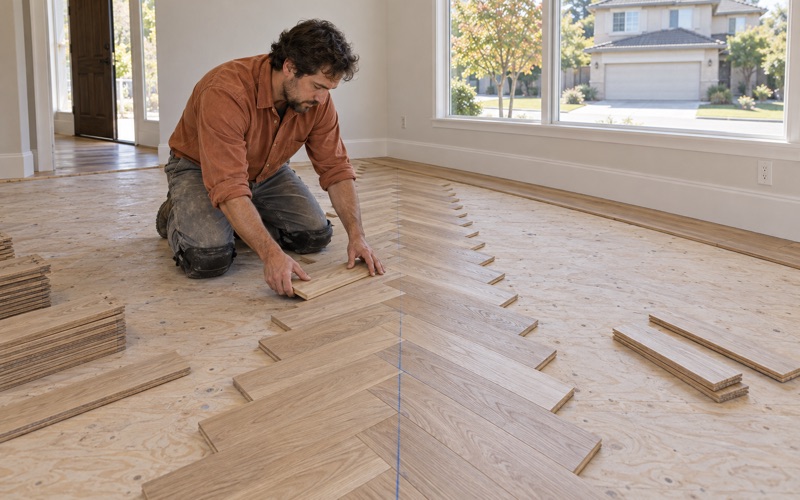
From there the conversation turns to what makes sense for that particular home. Engineered hardwood, a floating floor or another option may fit one job and not the next. We explain what we found, what we would want to confirm and what each choice involves, and the owner decides with that information in hand.
Park rules sit above the home
A home inside a mobilehome park answers to more than its owner. Under title 25 of the California Code of Regulations, the California Department of Housing and Community Development is the designated enforcement agency for mobilehome parks unless a city or county has been approved as the local enforcement agency. HCD’s park search page lists which agency covers a given park.
We look up that answer for the specific park instead of assuming it. Lakewood Mobile Estates on Carson Street is one park in the city, listed by a park directory as a 55-and-over community of 200 sites. For any park, we also ask the owner about management’s rules on contractor access, work hours and parking before we set a start date.
Duplexes, Plexes and Attached Homes
Shared walls and shared schedules
When a duplex owner lives in one half, or when several relatives share a single unit, a floor job has to work around people who are still living there. We hand over a written room-by-room schedule showing when furniture, rugs and people can return, which is useful in larger and multigenerational households where no room sits empty for long.
Sanding and finishing run in sequence so one part of the home stays usable. Cure time is written into that schedule plainly, because walking on a waterborne polyurethane coat too early leaves marks that need another round of work to fix.
Stairs, transitions and edges
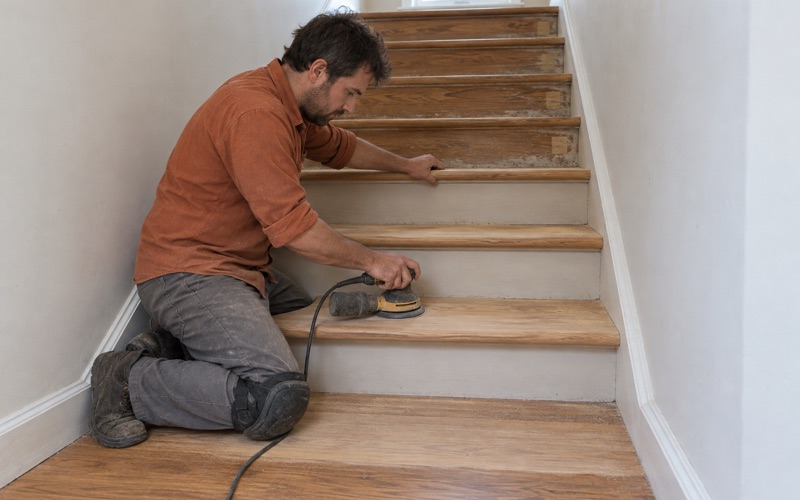
Many attached homes and upper units come with a staircase, and stairs take far more handwork than a flat room. We quote them by the tread, riser and stair nosing instead of folding them into a square-foot price, so the owner can see exactly where the labor goes and compare quotes on equal terms.
At doorways between units or rooms, reducers, T-molding, quarter round and shoe molding finish the edges once the field is done. We also leave the expansion gap a wood floor needs at the walls, since trim hides that gap and seasonal gapping or cupping follows when a floor is pinned tight.
Finishes that belong in this air district
Hawaiian Gardens sits in the South Coast Air Quality Management District, the air pollution control agency for the urban parts of Los Angeles County. Under SCAQMD Rule 1113, wood coatings carry a VOC limit of 275 grams per liter, and every finish we choose is a product legal to apply in this district.
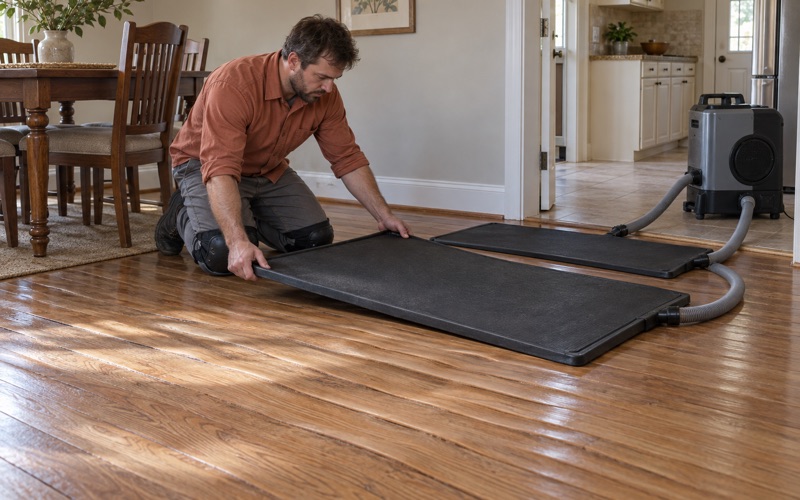
In close quarters that choice matters day to day. A waterborne polyurethane or other compliant finish, paired with dustless sanding equipment, keeps the work easier on the people living next door. We talk through sheen level and color with the owner before the first coat goes down rather than after.
Rental Floors for Small Landlords
A city where most households rent
The survey reports that 56.2 percent of occupied housing units in Hawaiian Gardens are renter-occupied. Many of those rentals belong to owners with a single house, a duplex or a small building rather than a large management company, and those owners tend to handle floor decisions themselves between tenants.
For that kind of owner, a floor job is a business expense with a deadline. The unit needs to be ready for the next lease, the work needs a clear price, and the records need to hold up if a deposit question comes back later on, sometimes months after the tenant has left.
Turning a unit between tenants
We quote rental floors between tenants alongside the move-out photos, and we put the scope in writing so a landlord can keep it with the deposit records. California Civil Code 1950.5 separates normal wear and tear from damage, and a dated scope helps an owner prepare a security deposit itemized statement that matches the work.
Common turnover repairs include a pet urine stain, gray boards near a door, sun fading and a finish worn through in a hallway. Some units need only a screen and recoat; others need board replacement or a weave-in repair first. We show the owner the difference before the price is set.
When the repair goes deeper
Small holes or powdery piles in a floor are identified before any board comes out. Drywood termite pellets, powderpost beetle frass and old nail holes look alike to a busy owner, and each one leads to a different next step, so we name what we see before recommending replacement.
If a job reaches the subfloor or a floor joist, the Hawaiian Gardens Building & Safety Division enforces building standards for alterations and renovations through permits, plan review and field inspections. We check with the division about structural work before scheduling it, and water losses get photos and moisture readings an adjuster can use.
- 20+ Years in Wood Floors
- Free Written Estimates
- Rental and Claim Documentation