Baldwin Park Wood Flooring brings more than 20 years of experience to wood flooring in Sierra Madre, and most of the jobs we take start with a floor that is already in place. The work is less about picking new boards and more about finding out what can stay, what needs repair and what a careful refinish can realistically bring back.
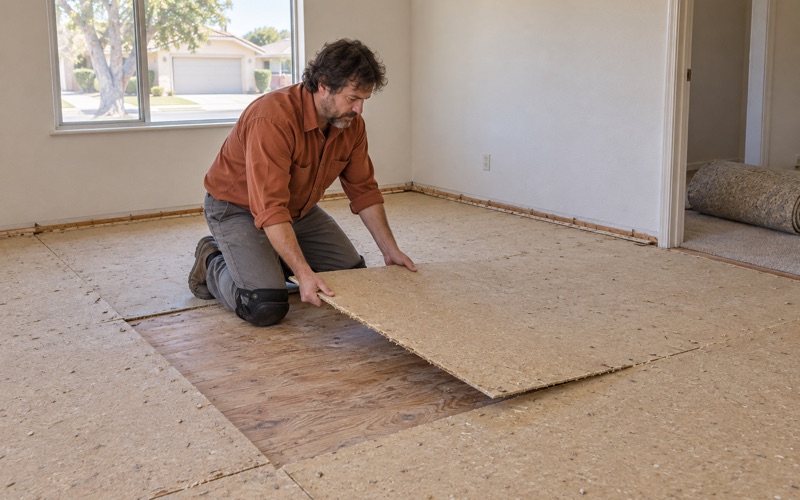
Our estimates start with a look underneath. We pull carpet back in one corner before quoting, so the number is written for the oak, plywood or particle board actually there rather than a guess. We also confirm when the house was built before sanding goes on the calendar, and larger households get a written room-by-room schedule for furniture, rugs and people.
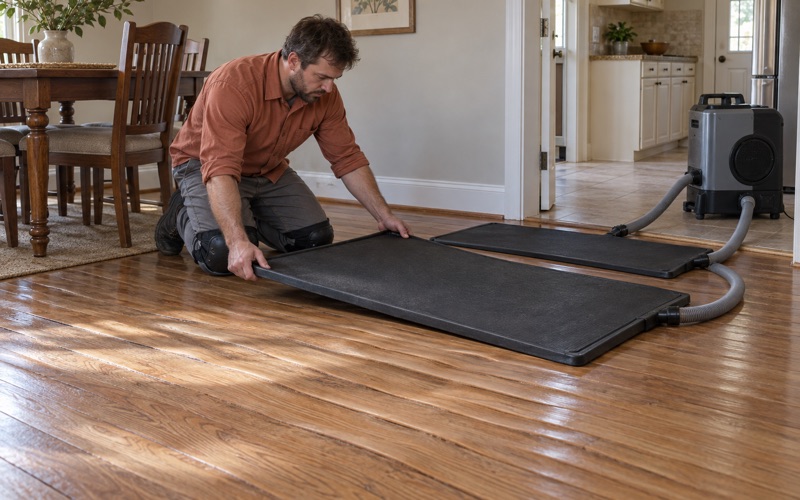
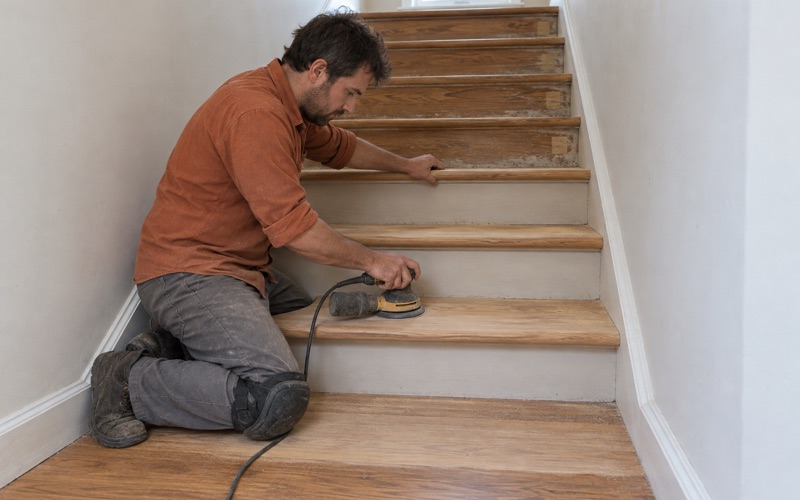
We also price the pieces that often get lumped together. Stairs are quoted by tread, riser and nosing, not folded into a square-foot figure. Rental floors between tenants get move-out photos and a written scope a landlord can file with deposit records, and water or smoke losses get photos and moisture readings an adjuster can use.
Old Floors in a City That Rarely Builds New
Few Houses From This Century
Census counts put a number on what we see at the door. The American Community Survey 2024 five-year estimates list 4,977 housing units in Sierra Madre, and only 294 of them, 5.9 percent, were built in 2000 or later. Just 45 date from 2020 or after. For most units here, any original floor that survives has decades of use behind it.
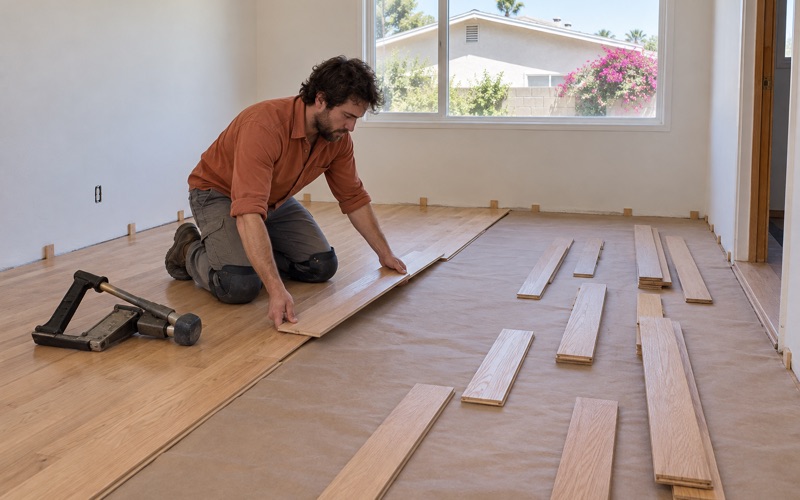
That shapes how we quote. A new-construction job starts from a clean subfloor and a delivery of fresh boards. Work in an older house starts from what is already there, whether that is oak strip flooring under carpet, parquet under a rug or several coats of finish from past refinishing. Our first job is finding out which, and whether it can be saved.
Four Building Eras Before 1970
The older stock is not one period. Of those 4,977 units, 875 (17.6 percent) were built in 1939 or earlier, 603 (12.1 percent) in the 1940s, 1,068 (21.5 percent) in the 1950s and 908 (18.2 percent) in the 1960s. Units built before 1960 make up 51.2 percent of the total, so an older house here could come from any of four distinct building eras.
Each era can bring different materials to a floor, and we do not assume which one a house holds. A prewar room might carry narrow oak strips over a board subfloor, while a postwar room could hide 9x9 floor tile set in black mastic. Suspect tile and mastic call for an asbestos survey under SCAQMD Rule 1403 before anyone disturbs them, so we check the layers first.
What the Floor Sits On
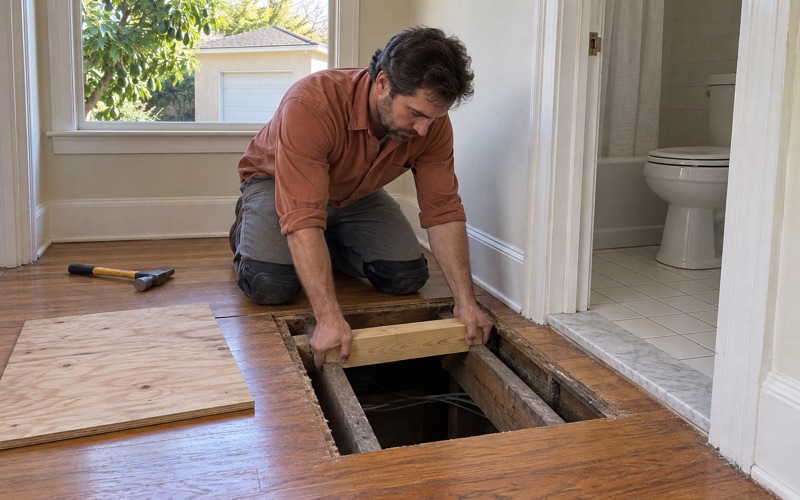
Before we recommend a repair, we find out what is under the floor. Some older houses sit on a raised foundation with a crawl space and floor joists we can inspect from below, while others are slab-on-grade, and we look rather than guess. A sagging floor or soft spot over a crawl space can point to a rotted subfloor or a joist that needs a sister joist.
Crawl space visits can also turn up an unbraced cripple wall. ZIP code 91024, Sierra Madre, is on the 2025 California Earthquake Brace + Bolt list for Southern California. We do not run that program, but when a floor repair and a bolting project are both planned, talking through the order of the two jobs helps keep a freshly finished floor from being disturbed later.
Looking for wood-flooring closer to San Marino? See San Marino Wood-Flooring.
Bungalows and Cabins in the Canyon
Narrow Roads, Small Rooms
Lower and Upper Sierra Madre Canyon are known for narrow, winding roads and small bungalows or cabins. That combination affects a flooring job before a single board is touched. We plan parking, carry distances and the size of our equipment around the street and the house, rather than arriving with a load that fits neither one.
In a small house, floor work also takes over more of the living space at once. We keep containment tight, use dustless sanding where the floor allows it, and write down which rooms are out of service on which days. For a cabin with only a few rooms, that written schedule can matter as much as the finish you choose.
Floors in Small Older Houses
We cannot tell you what share of canyon houses are bungalows or cabins, because no count of that exists. What we can describe is how we approach a small older house anywhere in town: expect a mix of original boards, later patches and coverings added over time, and expect each room to have its own history under the carpet or vinyl.
Typical findings in houses like these include hollow spots, squeaks, seasonal gapping between narrow boards and finish worn gray at doorways. Most of those are repair items. Gray boards near an entry can often be sanded out, while black water stains that run deep into the grain usually mean a board replacement woven into the surrounding floor.
Pellets, Frass and Nail Holes
Wood houses can show small holes or piles of fine powder near baseboards, and the cause matters. Drywood termite pellets, powderpost beetle frass and plain old nail holes look alike at a glance. We identify which one we are looking at before any board is replaced, because pulling boards for a problem that is no longer active wastes a sound floor.
When pellets point to live drywood termites, floor repair generally waits for the pest work, which can include tent fumigation. A Wood Destroying Pests and Organisms Inspection Report, if you already have one, helps us see what was found and treated. We then replace damaged boards with matching stock and refinish so the repair blends into the room.
Repairing and Refinishing Instead of Replacing
Build Year Before the Sander
The same census count shows 79.8 percent of Sierra Madre housing units were built before 1980. The federal EPA Renovation, Repair and Painting Rule applies to housing built before 1978, so the build year is one of the first things we confirm. Sanding can disturb old finish layers and painted trim at the floor line, and the rule shapes how that work is set up.
The census groups construction years into decades, so its 1970s bracket straddles the rule’s 1978 cutoff. That is why we confirm the year for the specific house instead of assuming from the street. When a house falls under the rule, we plan containment and cleanup to match it before the first pass of the drum sander.
Board Repairs and Weave-Ins
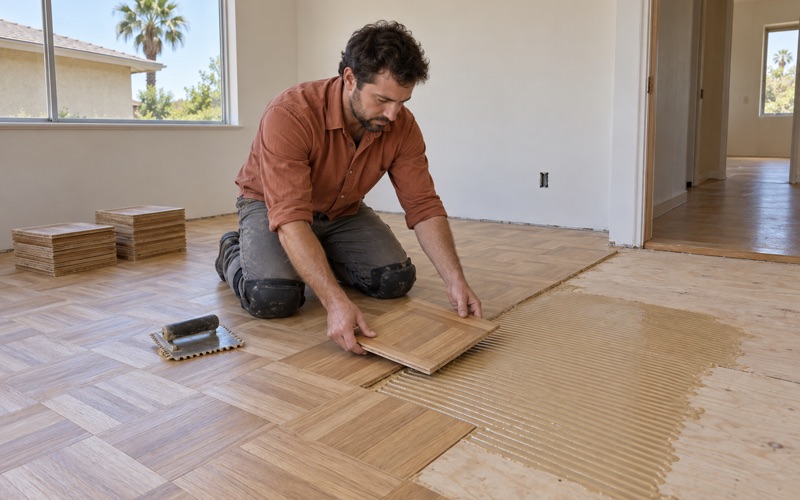
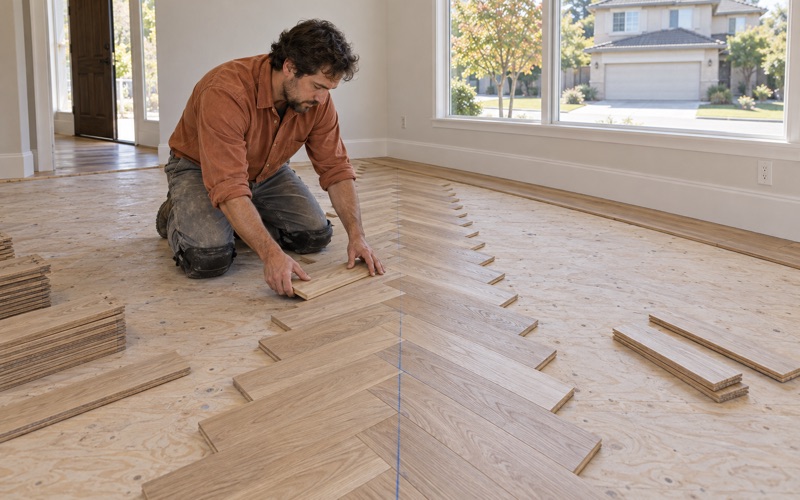
Most old floors we see need targeted repair before any refinishing. Loose parquet gets reset, nail pops get refastened, and cupped or crowned boards get checked with a moisture meter to find the source before anyone flattens them. Sanding a cupped floor before its moisture problem is solved can leave it crowned once the wood dries out.
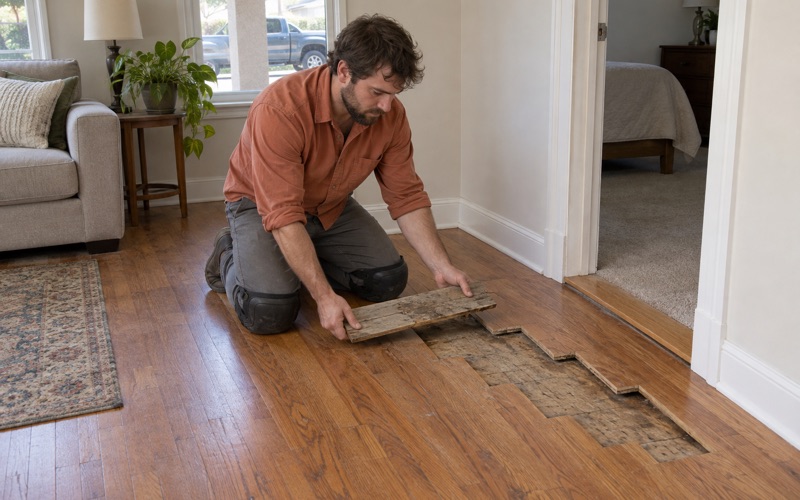
Where boards are too damaged to keep, a weave-in repair staggers new pieces into the existing layout so no straight seam shows. On carpet-to-wood jobs we fix tack strip holes, carpet staple rows and pad stains as part of the scope, instead of leaving them for a rug to hide later on.
Sand, or Screen and Recoat
Not every tired floor needs a full sand. A floor whose finish is sound but dull can often take a screen and recoat, which removes far less wood. Solid hardwood that has been sanded several times still has limits, and on engineered hardwood we measure the wear layer thickness before promising anything, because a thin veneer risks sand-through.
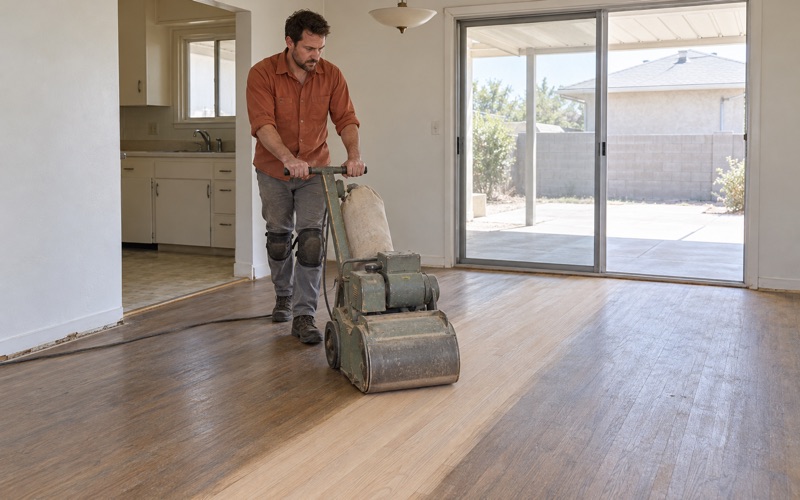
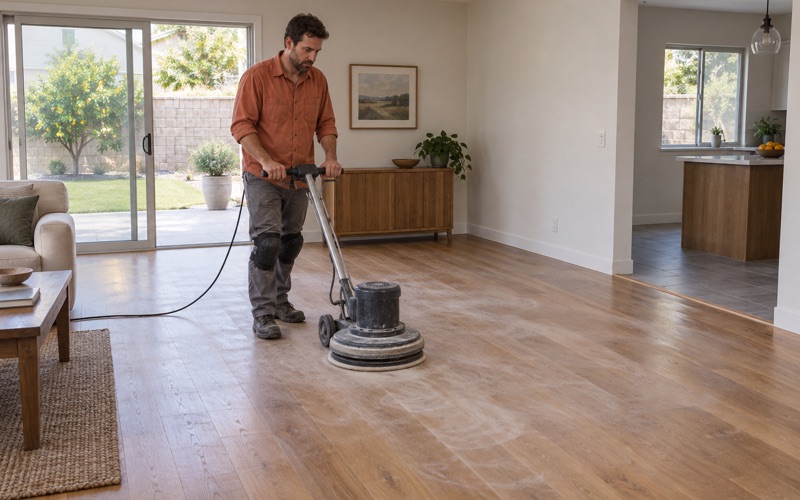
When a full sand is the right call, we work through an abrasive grit sequence with a drum sander, edger and orbital sander to keep chatter marks and edger marks out of the final surface. Finishes come from products legal in the South Coast air district, where the SCAQMD Rule 1113 wood coatings limit is 275 grams per liter.
Landmark Houses and the Mills Act Pause
The City’s Preservation Ordinance
Sierra Madre adopted its historic preservation ordinance in 1987, and a 1997 amendment made owner consent a requirement for landmark designation. Among the incentives for owners of local landmarks is a waiver of city permit and plan check fees. If your house is a designated landmark, tell us at the first visit so the plan accounts for it.
What we do not know is whether landmark review reaches interior floors, and we will not guess at it. The city’s Planning and Community Preservation Department is the place to ask. Our part is documenting the existing floor, including species, board width and finish, so the record of what was there is written down whatever the city tells you.
Mills Act Applications Are Suspended
Sierra Madre’s Mills Act program is limited to structures designated as City Historic Landmarks, and the City Council has suspended new applications pending a review of existing contracts. Owners who already hold a contract are expected to restore according to the rules of the state Office of Historic Preservation, which is worth reviewing before any work begins.
For flooring, that leads to a few practical points. We do not treat the Mills Act as a way to pay for floor work, and we do not suggest applying while intake is closed. If you already have a contract, bring its terms to the first conversation, and we will plan a repair-first approach that keeps as much original wood in place as we can.
Permits When Work Reaches the Structure
Refinishing and board repairs are one kind of job, while replacing a rotted subfloor or sistering a floor joist is another. The City of Sierra Madre Building and Safety Division oversees construction, demolition and alteration, and plan check, building and zoning applications go through the Accela Citizen Portal. When our scope reaches the structure, we raise the permit question with you before anything is scheduled.
- 20+ Years in Wood Floors
- Free Written Estimates
- Rental and Claim Documentation