Baldwin Park Wood Flooring has spent more than 20 years on wood-flooring in West Puente Valley and the neighboring streets, and the floors we get called to here rarely fail from age alone. They fail from use: a finish worn gray in a hallway, a dull path from the front door to the kitchen, a stair nosing rounded off by thousands of trips. That is the kind of floor this page is about.
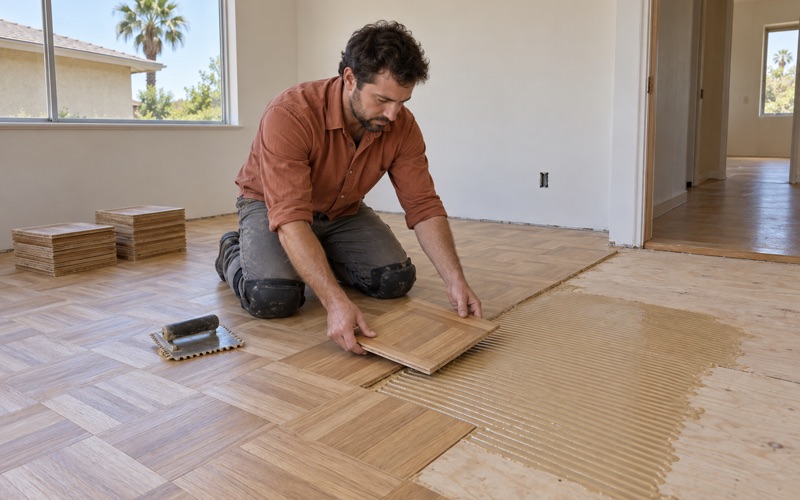
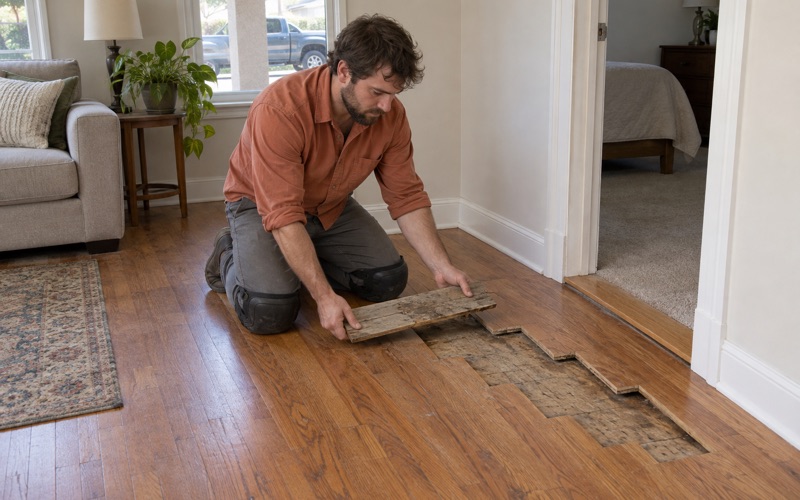
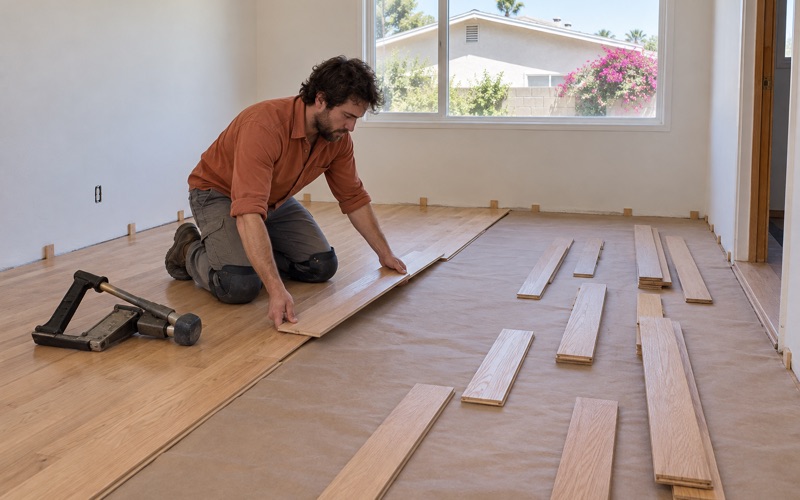
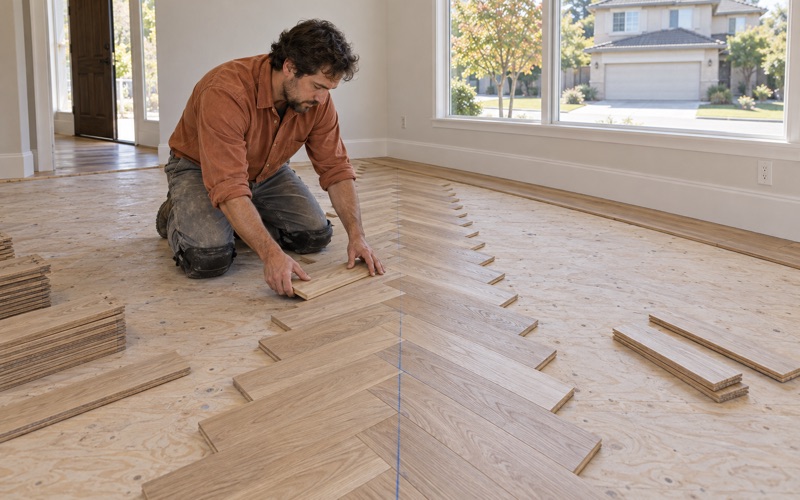
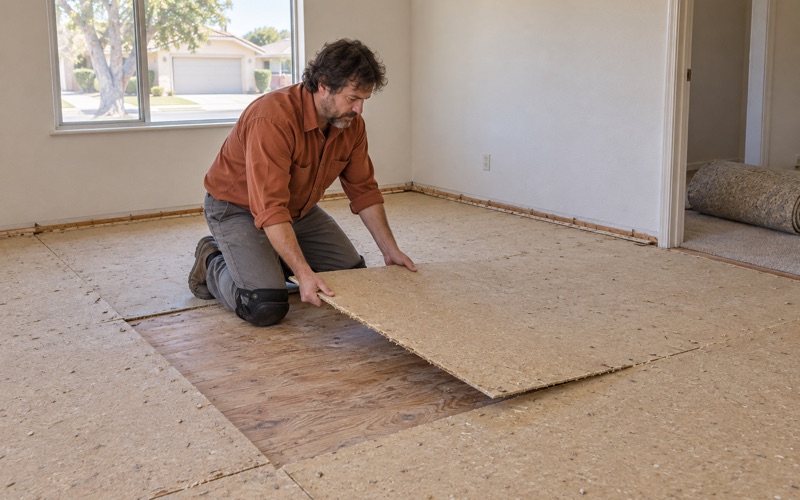
We sand and refinish solid hardwood, screen and recoat finishes that are tired but intact, replace damaged boards with a weave-in repair, rebuild stairs and turn carpeted rooms back into wood. Before we price a carpet-to-wood job, we fold back one corner of the carpet so the estimate describes the oak strip flooring, plywood subfloor or particle board actually sitting underneath.
On engineered hardwood we measure the wear layer before anyone mentions a full sand, because a thin veneer can take a screen and recoat but will not survive a drum sander. And because most homes we work in are busy from morning to night, every larger job comes with a written schedule that shows which rooms close, when furniture returns and when people can walk on the new finish.
What a Full House Does to a Wood Floor
More people per room than most places
The 2020 census put the average household in West Puente Valley at 4.28 people. That number matters on a floor more than it does on paper. A four- or five-person house has more trips through the entry, more chairs pulled back from the table and more shoes crossing the same boards, and the finish carries all of it long before the wood underneath does.
A larger household also changes the rhythm of wear. When someone is home through much of the day, the kitchen and family room never really rest. We plan for that in how we read the damage and in how we build the work order, rather than treating a lived-in floor like one in a quiet two-person house.
Traffic lanes and the paths people take
A traffic lane is the band of finish worn away along the route everyone walks: front door to kitchen, hallway to bathroom, bedroom doors to the living room. On a site-finished floor it shows as a dull gray stripe next to glossy finish that still looks new under the couch. The contrast is often what brings a homeowner to call us.
The question we answer is how deep the lane goes. If only the top coats are gone, the wood is still sealed and the floor is a recoat candidate. If the lane has turned the boards gray, the finish wore through and moisture and dirt reached raw wood. That floor needs sanding, and the sooner it is caught the less wood we remove.
Entries, kitchens and where finish fails first
Entry wear is grit, not weight. Sand carried in on shoes acts like abrasive paper under every step, and in a full house the doormat cannot catch all of it. We see scratched finish just inside the door, around the kitchen sink where water drips and at the spot in front of the refrigerator where everyone stops.
Kitchens add chairs and spills to the grit. Chair legs without pads cut arcs into the finish, and water left standing along the dishwasher can lift a cloudy finish or leave black water stains in oak. We check those spots with a moisture meter before we quote, since a stain that reaches the wood needs board replacement rather than another coat.
Looking for wood-flooring closer to Vincent? See Wood-Flooring Services in Vincent.
Recoat or Full Refinish: Reading the Wear
When a screen and recoat is enough
A screen and recoat, sometimes called a buff and coat, lightly abrades the existing finish and adds fresh coats on top without cutting into the wood. It works when the wear is limited to the finish: surface scratches, dull lanes and a general loss of sheen with no gray boards showing. It is faster, creates far less dust and removes almost no material.
The catch is that a recoat will not bond to a floor that has been waxed or treated with some polish products, and it will not hide deep scratches or stains. We test adhesion in a small area first. There is no fixed calendar for recoating, so we judge timing by the floor in front of us, and in a busy house that means looking closely at the lanes.
When the wood itself needs sanding
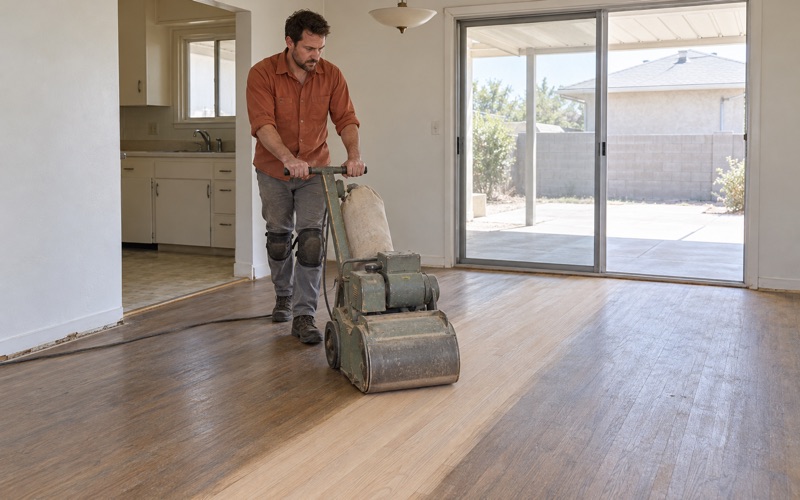
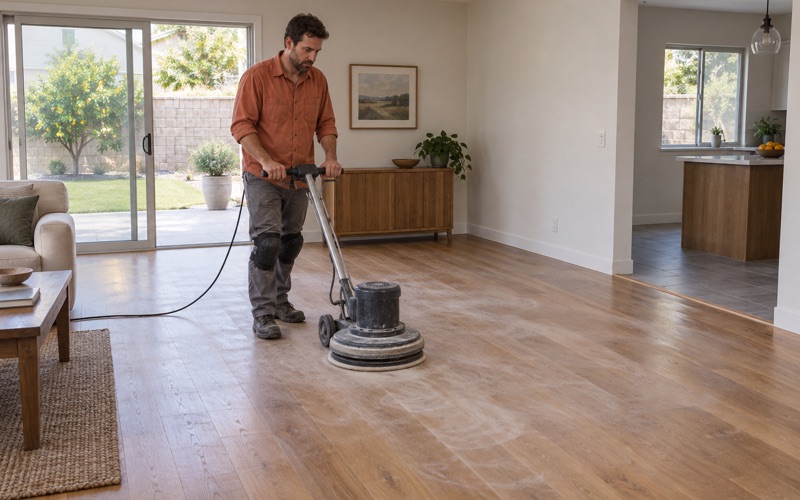
Gray boards, deep gouges, pet urine stain, cupping that has flattened and left edges, or finish peeling in sheets all point to a full sand-and-refinish. We work through an abrasive grit sequence with a drum sander, an edger along the walls and an orbital sander to blend out edger marks and chatter marks before the sanding sealer goes down.
Sanding also resets color. Older oak finishes often amber into an orange floor finish, and a homeowner who wants a lighter look can only get it by taking the floor back to bare wood. We talk through stain, sheen level and finish type at the quote, because in a hard-used house a lower sheen hides everyday scratches far better than gloss.
Engineered floors and the wear layer
Engineered hardwood looks like solid wood from the top, but only the wear layer is real hardwood, and its thickness decides everything. A thick wear layer can be sanded like solid flooring. A thin one can take a screen and recoat and nothing more, and a sanding pass through it causes sand-through and veneer delamination.
We pull a floor vent or look at a threshold edge to measure the wear layer before promising anything. If the veneer is too thin to sand and the lanes have reached the wood, the honest answer may be board replacement in the worn areas or a new floor, and we say so in writing.
Scheduling Floor Work in a Full House
Room-by-room plans that keep the house running
In a house of four or more, closing every room at once rarely works. We split the job into zones and give the family a written, room-by-room schedule showing when each area closes, when furniture and rugs can go back and when people can walk on the floor again. Bedrooms, the kitchen path and the bathroom route are sequenced so someone can always get through.
The schedule covers practical details too: where the furniture sits while a room is out of use, which door the crew uses and which one the household keeps. For homes with older relatives or small children, we plan the loudest sanding for the hours the household tells us work best. A plan on paper prevents most of the frustration a full house feels during floor work.
Dust, finishes and cure time
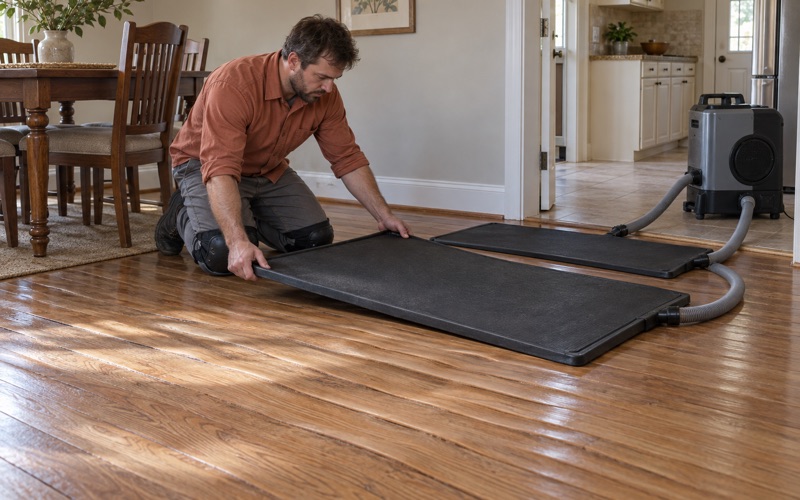
We use dustless sanding equipment that pulls most of the fine dust into a collection system instead of the air, which matters when people are living in the next room. Plastic barriers seal doorways, and HVAC returns in the work area are covered while we sand.
Our finishes are products legal to apply in the South Coast Air Quality Management District, where the SCAQMD Rule 1113 wood coatings limit is 275 grams per liter. Waterborne polyurethane dries faster and has less odor, which suits occupied homes, while oil-modified polyurethane cures more slowly. We tell the household the cure time for the product we choose so rugs do not go down too soon.
Stairs take a beating of their own
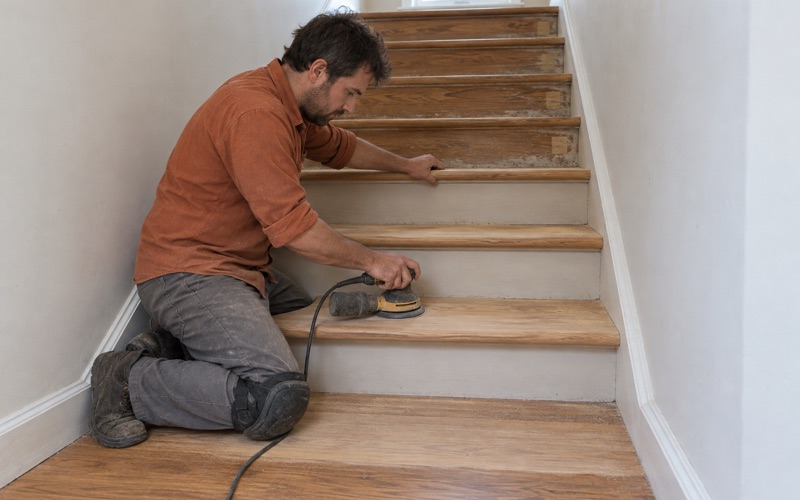
In a busy house with a staircase, the stairs see traffic from every person on every trip. The nosing wears first, then the center of each stair tread. We quote stairs by the tread, riser and nosing rather than folding them into a square-foot price, so a homeowner can see exactly what refinishing or a retrofit tread costs step by step.
Detached Homes, Owned and Lived In
A community of single-family houses
West Puente Valley is mainly residential, and the housing count shows it. The 2024 American Community Survey five-year estimates list 4,762 of 5,315 housing units, or 89.6 percent, as one-unit detached houses. Owners occupy 77.8 percent of occupied homes, and 94.5 percent of owner households live in detached houses, with no owner household recorded in a multiunit building.
For floor work, that means most of our jobs here are for families who live on the floor they are paying to fix and expect to keep living on it for years. The decision is less about a quick cosmetic pass and more about protecting the wood for the long run, which is why we explain recoat and refinish options side by side.
Permits under Los Angeles County
West Puente Valley is an unincorporated community, so there is no city building department. Construction, alteration and repair of buildings here fall under Los Angeles County Code Title 26, and permits run through Los Angeles County Public Works, Building and Safety. The county has a La Puente Building and Safety Office on East Central Avenue.
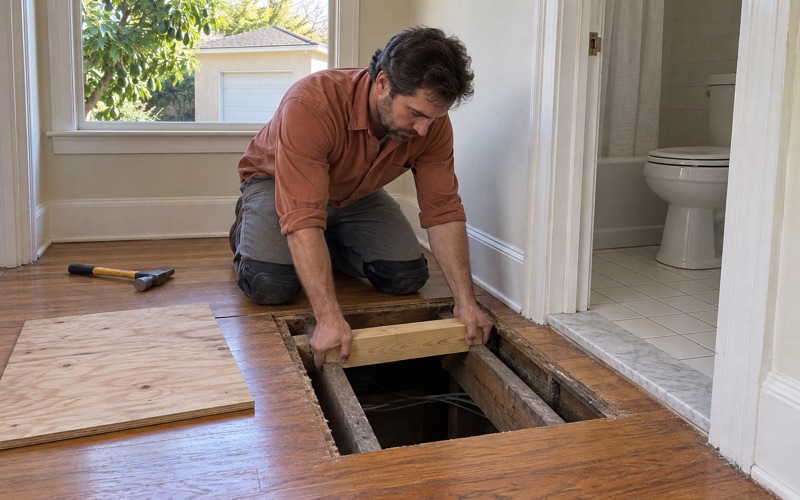
We do not assume a permit answer for any job. If a floor repair turns up a rotted subfloor, a sagging floor joist or other structural damage, we stop, document it and point the homeowner to county Building and Safety before that work moves ahead.
Older finish layers and lead-safe work
The housing stock here is mostly older: 93.1 percent of units were built before 1980. The EPA Renovation, Repair and Painting Rule covers renovation in pre-1978 housing, and old paint on baseboards, shoe molding and door casings can be disturbed during sanding. We check the build year before any sanding is scheduled and plan the containment around what we find.
Streets, parks and getting to the job
The community sits on relatively flat ground with streets running northeast to southwest, and many of the smaller residential streets end in cul-de-sacs. That affects how we park equipment trucks and stage materials so neighbors can still get in and out. Bassett Park on the west side and Allen J. Martin Park on the east are the easy landmarks we use when confirming an address with a new customer.
- 20+ Years in Wood Floors
- Free Written Estimates
- Rental and Claim Documentation